“I never heard of the rabbi, but please tell him from me that if I were not Jewish, I would convert for this melody"
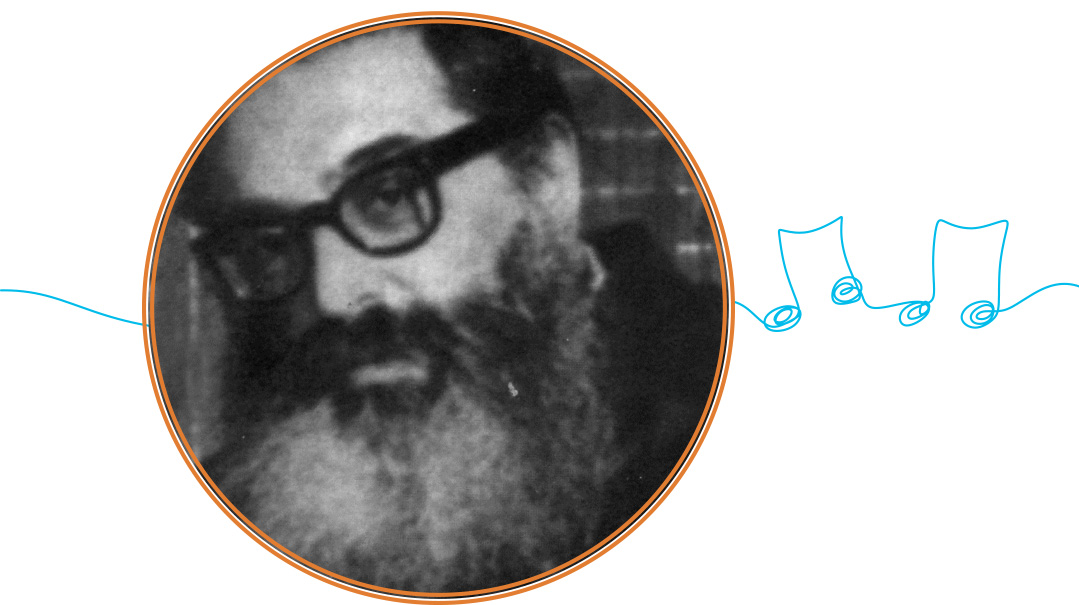
The Rosh Yeshivah’s love of niggun, and the way he used it to enhance the delivery of his world-famous maamarim, was legendary. In this way, he forged an unusual bond between mind and heart,” says Rabbi Yitzchok Alster, a rosh kollel in Jerusalem’s Har Nof and long-time composer himself, who was a close talmid of RAV YITZCHOK HUTNER (1906-1980). In fact, the niggunim that were sung during those exalted Yom Tov gatherings with Rav Hutner were viewed by many as part of the maamar itself. His son-in-law, Pachad Yitzchok rosh yeshivah Rav Yonason David, a tremendous talmid chacham in his right, has continued the tradition, and the niggunim continue to inspire another generation.
Prior to Rav Hutner’s years at Yeshiva Rabbeinu Chaim Berlin, singing and music generally had no pride of place in the world of Litvishe yeshivos. Even the “singing” parts of davening, such as Keil Adon and Hallel, were often recited tunelessly. Rav Hutner was a pioneer in the singing of niggunim, which is now a standard part of yeshivah life across the globe.
In 1960, Yeshiva Chaim Berlin produced a record called Torah Lives and Sings, which included some of Rabbi Alster’s compositions, such as the enduring classic “Yedid Nefesh” (the niggun often sung at Shalosh Seudos). At the time, Rav Hutner told his talmid Yitzchok Alster that he’d broken the norms and done this “so that there should be something by which people would remember the 1950s in Chaim Berlin.” Although the record never became a commercial success — it was professionally produced, but years before its time — Rabbi Alster says he understood the Rosh Yeshivah’s words years later, when he learned a Tosafos in Maseches Megillah that talks about how singing the words of the Mishnayos helps one remember it better. The melodies were a means to remember the Torah, and for Rav Hutner, niggun was also a tool for spiritual elevation and connection, and to recall a certain era.
Rabbi Alster attributes the inspiration of much of the music in his generation to the great Torah revival of the 1950s and 1960s of which Rav Hutner was a pivotal force. Rabbi Alster composed “Yedid Nefesh” as a bochur, sitting with a friend on the banks of Echo Lake, a small lake in the Catskills. At first, he had just the niggun, then the words came to him. In the late 1950s, the song was sung at Chaim Berlin’s Camp Morris, and years later was still being sung at Rav Yonason David’s Shabbos maamar.
Create a free account to keep reading.