These ancient remnants next to the Mediterranean tell another tale, of two parallel Jewish worlds focused on two cities
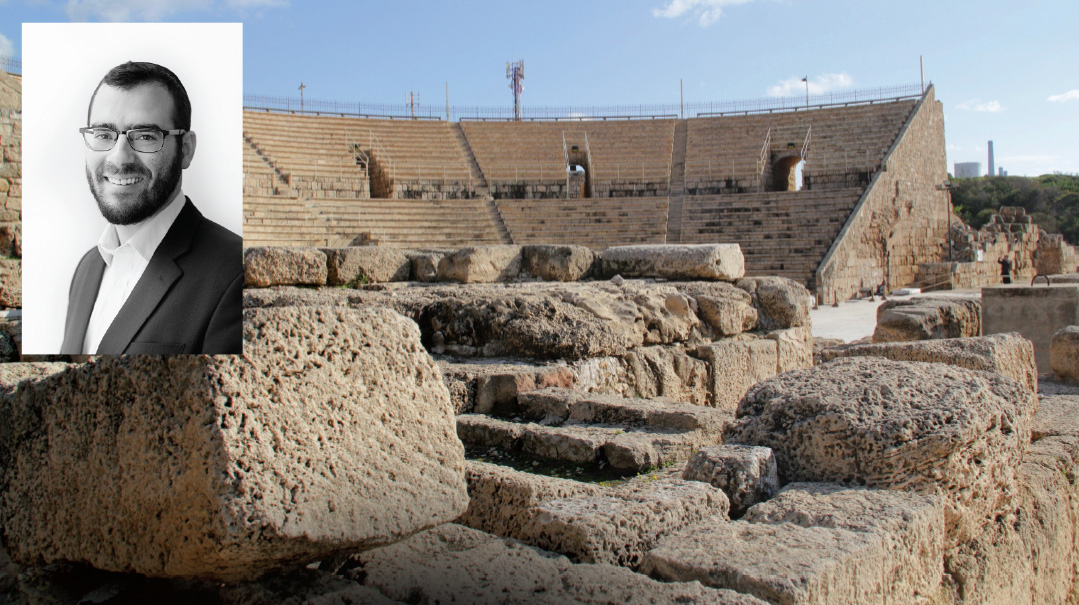
Stand on the ruins of the Roman hippodrome on the Caesarea beachfront, and you can almost hear the roar of the crowd. Here, two millennia ago, 13,000 spectators watched chariot races, having docked in Herod the Great’s remarkably-engineered adjacent harbor. A stone’s throw from the sports arena lay the administrative headquarters that was the nerve center of the Roman presence in ancient Judea. There are traditions that somewhere in this complex, Rabi Akiva was imprisoned and executed for teaching Torah in defiance of Hadrian’s decrees.
Two millennia later, the magnificent relics are a reminder of what made Herod the land of Israel’s most successful builder until the Azrieli family with their malls and Tel Aviv skyscrapers.
These ancient remnants next to the Mediterranean tell another tale, of two parallel Jewish worlds focused on two cities.
Seventy years after the Churban, Yerushalayim was still the spiritual focal point of the Jewish people. But alongside the Torah-true Jews of Jerusalem, a deeply Romanized Jewish population was centered on Caesarea.
Create a free account to keep reading.