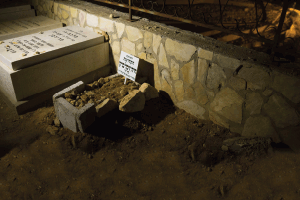
The burial chamber of the Maccabees, the heroes of the Chanukah story, included seven pyramids and grand columns, an edifice that was to be seen “by all who sail the sea.” But the sands of time covered the tombs and obscured their location. Will a determined sleuth bring us closer to the real site — maybe in time for next Chanukah?
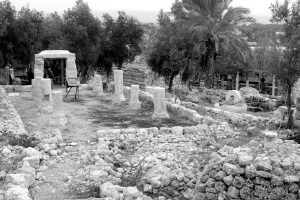
Archeologists have been searching for the graves of Mattisyahu ben Yochanan Kohein Gadol the Chashmonai and his sons since the mid-1800s. Chazal make no mention of the Maccabees’ burial place but their tomb is mentioned in Sefer Chashmonaim I (13:27–30):
“And Shimon built a monument over the top of his father and his brothers; he made it high that it might be seen…. He also erected seven pyramids opposite one another for his father and mother and four brothers … erecting about them great columns and upon the columns he put suits of armor for a permanent memorial and beside the suits of armor carved ships so that they could be seen by all who sail the sea. This is the tomb which he built in Modiin; it remains to this day.”
Finding the burial site sounds simple enough except for two things: The monument with its seven pyramids sitting on top has been lost to time. And the ancient city ofModiinno longer exists.
The first step for those early explorers was therefore to find the Maccabees’ hometown. They had two ancient sources to guide them: the writings of a Roman historian named Eusebius and the sixth-century Madaba Map. Eusebius who was born in Caesareaaround the year 260 penned a book called Onomasticon in which he catalogued all the sites listed in Tanach. He included both the scriptural reference and — most importantly for later pilgrims and archeologists — the “modern” name of the city or town located near the biblical place. Thus for Modiin he wrote that it was located “east of Lyddia ” which we know as present-day Lod. What’s more he mentions that one could still visit the tombs of the Maccabees.
Create a free account to keep reading.