Reb Berisch Weiss relives the harrowing days in a bunker with his father, the Minchas Yitzchak
Photos: Aryeh Rechnitzer
T
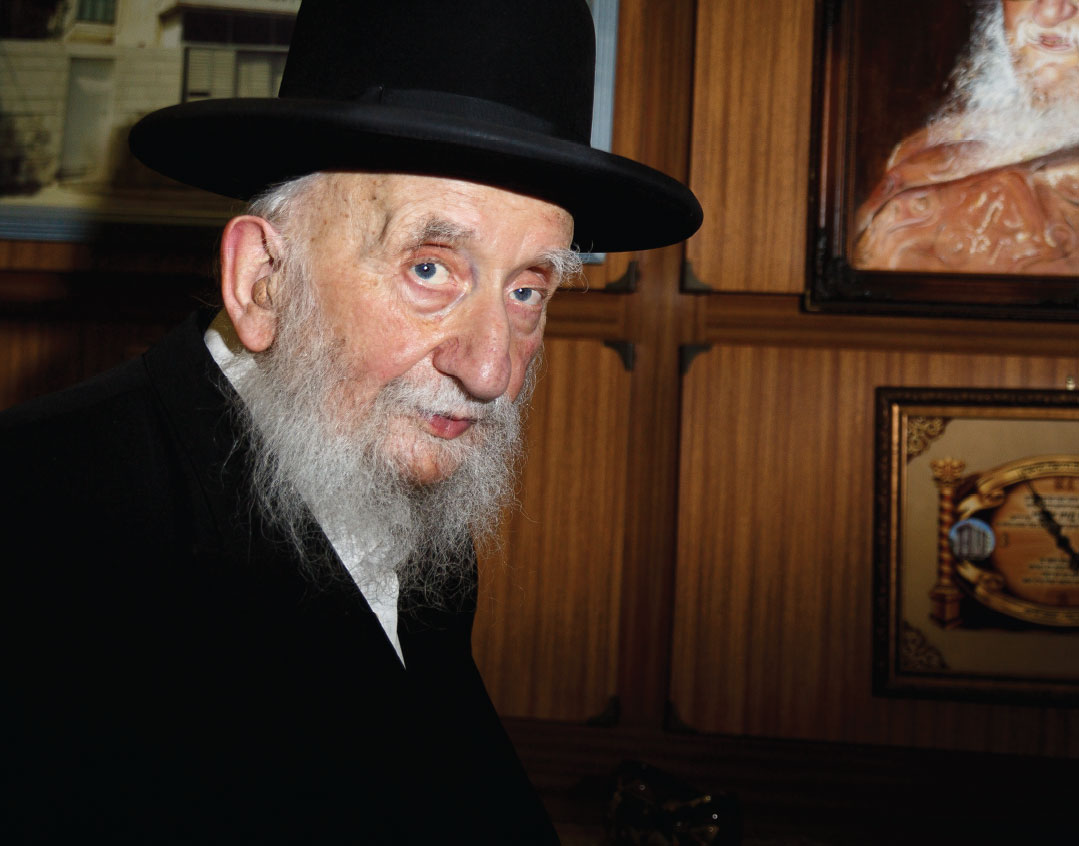
wo years ago, Reb Berisch Weiss, the longtime rosh kahal of Manchester’s Satmar community and only child of Dayan Yitzchak Yaakov Weiss ztz”l, the Minchas Yitzchak, took his family on a trip back to his roots in Grosswardein, Romania. Reb Berisch himself was already elderly, but his recollections as a teenager — first growing up under the wing of his illustrious father, then escaping the Nazis in a miraculous flight of salvation, and finally returning to rebuild a shattered kehillah — were part of the essential legacy he wanted to leave them 70 years later.
The Minchas Yitzchak (taken from the name of his ten-volume set of teshuvos, heavily relied upon by modern poskim and batei din), who served as head of the Eidah Hachareidis rabbinical court in Jerusalem following a two-decade tenure as av beis din of the Manchester Beth Din, passed away 30 years ago, on 11 Sivan 5749. But for Reb Berisch, his larger-than-life persona still lives on — and it was time for his children and grandchildren to connect on the ground.
They visited the grave of his mother, Rebbetzin Rivkah, who passed away at the end of 1944 after suffering extreme physical privation during months of hiding and then fleeing to Romania. They then continued to the house where the Minchas Yitzchak and 15-year-old Berisch had lived after the war, when they returned to Grosswardein in an effort to salvage the remnants of a once-thriving Jewish hub. In the small courtyard stood a small wooden square — the platform of a chuppah. “In this courtyard, on Lag B’omer of 1946, my father stood and was mesader kiddushin for 30 couples,” Reb Berisch told his family. Because if anyone could reinvigorate the broken, penniless young survivors, and if anyone could resolve the heartbreaking questions of the stream of agunos looking to remarry, it was the Minchas Yitzchak.
A major halachic authority whose decisions were revered around the Jewish world from the time he was a young man, the Minchas Yitzchak, who’d served as a dayan in Grosswardein before the war, returned to the city where many survivors had gathered in order to reestablish some normative Jewish life. In 1947, when it had become clear that the Communists were in Romania to stay, Dayan Weiss moved to Manchester, England, where he helped nurture a tiny group of chareidi Jews into a thriving Torah community. He remained in Manchester until his retirement from the beis din in 1970, when he was appointed to join the Eidah Hachareidis beis din in Jerusalem. With the passing of the Satmar Rebbe, Rav Yoel Teitelbaum, in 1979, he became gaavad of the Eidah.
Create a free account to keep reading.