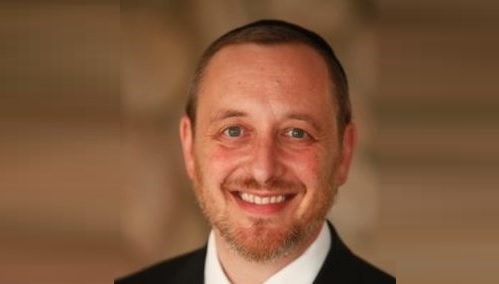
The role that the Catholic Church and its Pope leader played in the Holocaust is a subject of ongoing historical scrutiny, especially as the current pope hints broadly that he will name Pius to the Catholic sainthood. Dr. David Cymet, born in Mexico and the first Latin-American bochur to attend Yeshivas Torah Vodaath in 1944, is one of the most recent scholars to examine this controversial and troubling era. He hopes his newest book will both bear witness to the Holocaust and force us to remain vigilant.
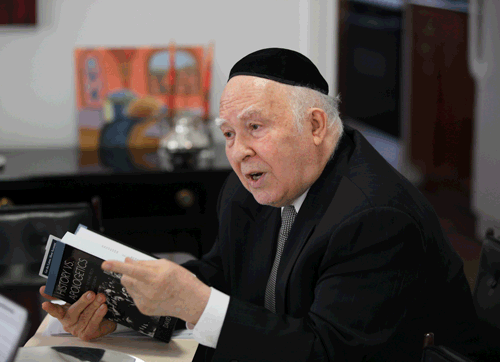
“I always felt that even though I was not in the Holocaust the Holocaust was somewhere in me ” says Dr. David Cymet as he sets down a tray of refreshments for his guests on his dining room table.
While Dr. Cymet’s hospitality especially the ice-cold seltzer served in a tall glass pitcher is deeply appreciated on this blazing hot summer day his kindness is equally matched by his earnestness and passion for the topic that has consumed the last seven years of his life at an age long after most men would have retired.
There is a wide range of historical views regarding the role of the Catholic Church in the Holocaust era but more or less there is a consensus that Hitler yemach shemo v’zichro was certain that no nation had the spine to stop his diabolical plans. He was however fully cognizant of the worldwide power of the Catholic Church. He felt it was the only organized body that had both the global political clout and a moral bully pulpit from which to condemn him and call attention to his evil ways. As a result Hitler made it a major priority of his first 100 days in office to win the church over to his side. A concordat — an official treaty between Nazi Germany and the Catholic Church — was indeed signed a few short months after Hitler assumed power in Germany in the winter of 1933. The concordat was signed by Vatican Secretary of State Eugenio Pacelli who took on the name Pius XII when he was elected pope six years later.
Pacelli was no stranger to Germany and its culture. He had served as head of the Vatican’s diplomatic mission in Munich from 1917 to 1925 and then in Berlin from 1925 to 1929 when he returned to Rome to become secretary of state.
Create a free account to keep reading.