A day at the docks exposes a supply chain left high and dry
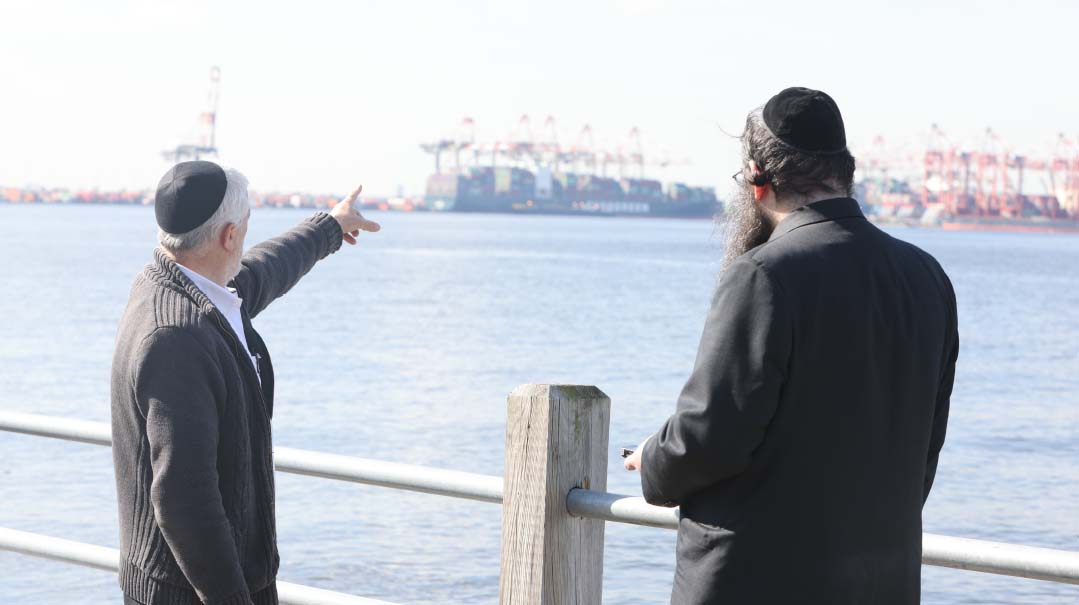
The seagulls soaring overhead and the clanking of marine equipment testify to the proximity of the ocean — but for some reason, the air near the container shipping port in Bayonne, New Jersey, smells more like fuel than saltwater.
“You don’t really smell the seawater because it’s masked by the fuel produced by the glut of massive shipping containers around the port,” says Baruch Guzelgul, veteran sailor, trucker, and owner of Monsey One Trucking.
I watched as one large ship was being unloaded in the port. The freighter wasn’t exactly graceful, but it’s easy to be impressed by its giant size and the enormity of its load. The ship, marked with the letters CMA for the French carrier and the fourth-largest shipper in the world, was unloading 15,000 rusty yet colorful containers whose contents held anything from clothing for Macy’s and plastic bottles for Kedem to coins for Brinks and wood chips and steel to supply the East Coast’s growing housing demand.
A series of gigantic quay cranes reached out from under a conveyor, briskly transferring one container after the other from ship to shore. While the ship is nowhere near empty, a yard nearby is full of containers piled high, awaiting the fleets of trucks that will whisk them to their next destination. A second ship, identified by its white markings as coming from Israeli shipping giant ZIM, waited patiently under the distant Verrazano Bridge for its turn.
Create a free account to keep reading.