LONG READS Issue 1015 · June 9, 2024

Believe That You Can   

Hagaon Rav Reuven Feinstein on choices in chinuch, how to feel the pain of Eretz Yisrael, and the source of personal greatness
Believe That You Can   
On Shavuos we celebrate that moment in history when we stood at the foot of a mountain and heard the roar of the Aseres Hadibros.
The Ohr HaChaim Hakadosh comments on the pasuk, “V’atah tetzaveh es Bnei Yisrael” (Shemos 27:20) that the word “tetzaveh” can mean “escort.” Through the talmidei chachamim of each generation, Moshe Rabbeinu continues to escort the People whom he led, loved, and sacrificed for.
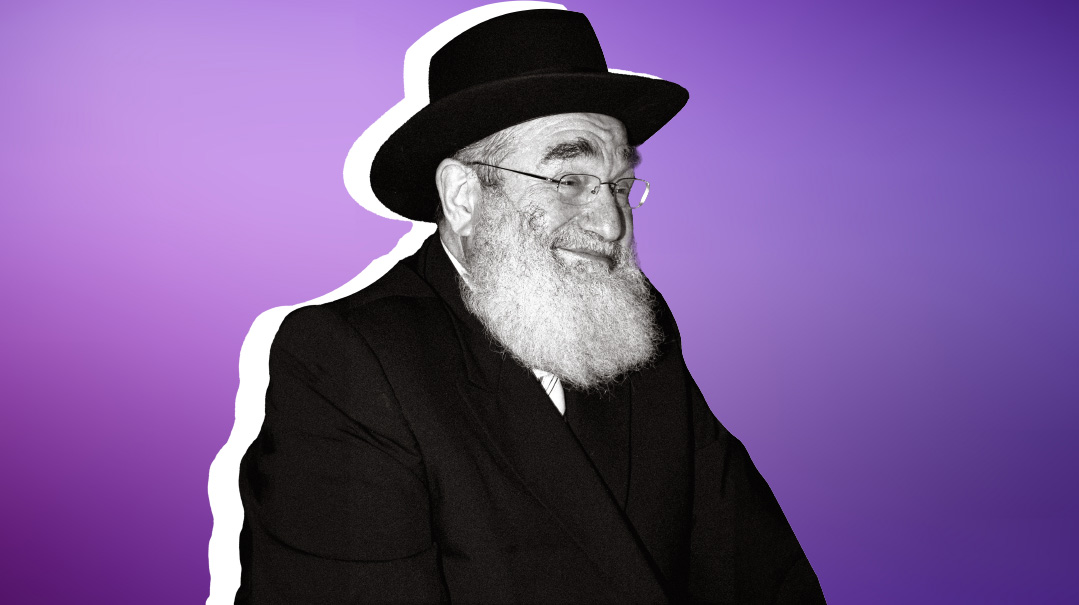
In honor of the Yom Tov of kabbalas haTorah, we asked a series of questions to one of the great talmidei chachamim of our times, Rav Reuven Feinstein shlit”a, rosh yeshivah of Yeshiva of Staten Island, and received the Rosh Yeshivah’s sage advice in response.


The Gemara (Pesachim 68b) discusses the tension between the spiritual and the physical when celebrating a Yom Tov. It concludes, “hakol modim d’ba’Atzeres ba’inan nami lachem,” that all agree that on the Yom Tov of Shavuos there must be an element of “lachem,” of physical enjoyment. The Gemara continues, “mai taima — why is this so? Yom shenitna bo Torah — it’s the day on which the Torah was given.” But the pasuk in Devarim (9:9) tells us that when Moshe was on the mountain for 40 days, he didn’t eat or sleep. Does this imply that accepting the Torah mandates full abstinence from physicality? How do we reconcile this? And how should we be educating our children in terms of striking a balance between spirituality and physicality?

Torah itself is entirely ruchani. It has no physical bearing at all. Moshe Rabbeinu went up to Shamayim to receive the Torah and existed during that time completely devoid of physicality. Only Moshe was capable of this. Even Eliyahu Hanavi, who also spent 40 days and nights on Har Sinai, did so with the energy he mustered from eating beforehand (see Melachim I 19:8). The pshat isn’t that Moshe abstained from eating and drinking for 40 days and 40 nights, the pshat is that he didn’t need to eat or drink for 40 days and 40 nights. But in this world, we relate to the Torah from a physical perspective. The Torah is meant to elevate the physical. The Zohar teaches, “istakel b’Oraisa u’bara alma,” that Hashem looked into the Torah and created the world. What this means is that the entire purpose of the Torah was so that it should allow us to live an elevated life in this world. Without Torah we’re not people — we’re like animals.

The way this manifests in chinuch isn’t to encourage prishus. Rather, the lesson is that everything we do should be for a purpose. We can — and should — engage in Olam Hazeh, but only for the purpose of growing in ruchniyus.

The Torah describes Matan Torah as being a terrifying experience to the point where, “nafshi yatza b’dabro (Shir Hashirim 5:6), Klal Yisrael lost their souls. But in what seems to be a direct contradiction, there’s a pasuk in Tehillim (19:8) which says that Torah is meshivas nafesh,” it restores the soul. Should we relate to Torah as something fearful and imposing, or as something to enjoy and delight in? If it’s the latter, then why was Matan Torah such an awe-inspiring experience?

This is the same yesod as the previous one. The Torah, when coming straight from Hashem, is too powerfully spiritual for us to withstand. We heard the first two dibros from Hashem — Anochi and Lo yihyeh — and our nefashos leaped out of us. Only Moshe Rabbeinu was able to hear the dibros straight from Hashem, just as he was the only one able to live for 40 days and 40 nights without food.

We, who must live in a physical world, can’t withstand such intense spirituality. On the contrary, the Torah we live with is meshivas nefesh, it restores the soul, for it allows us to live with spirituality even within our physical existence.

Continue reading with Mishpacha.

Create a free account to keep reading.

Everything you need to stay close to Mishpacha.
← Previous installment Secret Service Next installment → Seven Becomes Eight