We spoke with David Schenker, the Taube Senior Fellow at the Washington Institute and director of its Program on Arab Politics
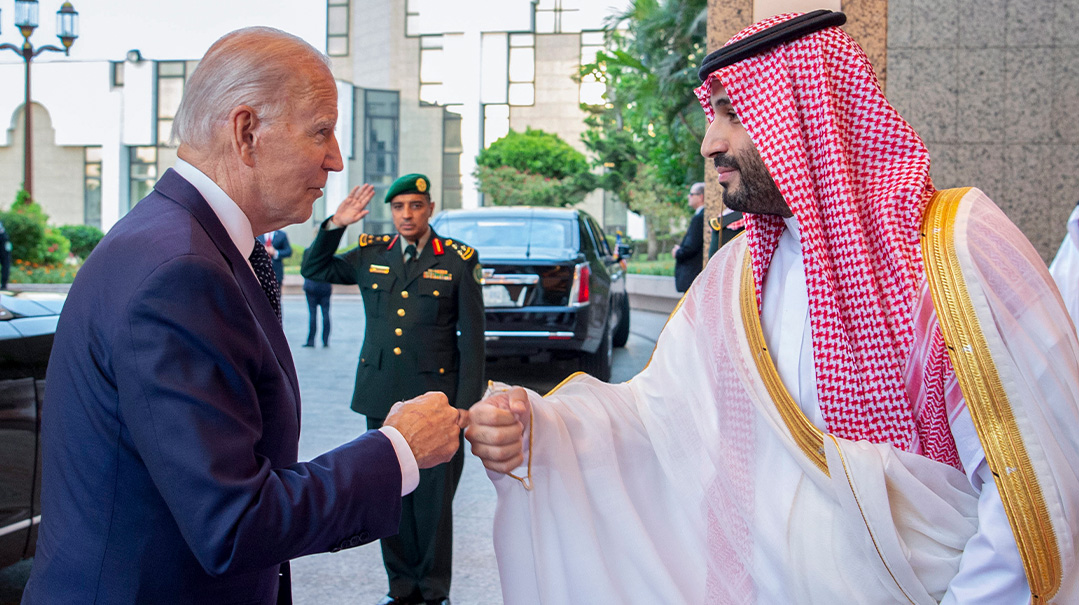
Despite the Biden administration’s best efforts to put the Middle East on a back burner, events there inevitably seem to conspire to come to a full boil and demand full attention. We wanted to get a read on the White House’s responses to recent events and developments there, as well as a forecast as to where things might be headed.
To that end, we spoke with David Schenker, the Taube Senior Fellow at the Washington Institute and director of its Program on Arab Politics. Schenker served as assistant secretary of state for Near Eastern affairs from June 2019 through January 2021. In that capacity, he was the principal Middle East advisor to the secretary of state and the senior official overseeing the conduct of US policy and diplomacy in a region stretching from Morocco to Iran to Yemen, with responsibility for 18 countries, the Palestinian Authority, and Western Sahara. He also supervised more than 9,000 staff and administered an annual budget in excess of $7 billion.
“Well, it’s a particularly tense time. Not only from the Jordanian perspective, with the new Israeli government. What they are concerned about is the trajectory of developments on the ground going into Passover and Ramadan. And so, yes, I think it’s an important time to be here. But there are always varying degrees of crises for the Jordanians.”
“Well, certainly you had the Biden visit [last July], when he was clear that he didn’t think the time was ripe for making progress on a political horizon. But of course, developments on the ground change the plans of Washington. And so you had, within a week-and-a-half period, Bill Burns, Jake Sullivan, and the secretary of state all visit in rapid fire, to demonstrate not only interest in de-escalation on the ground, but also looking at the first few months of the Netanyahu government with Ben Gvir and Smotrich, and the signals that had been sent about ‘maintaining the status quo on the Temple Mount’ and annexation. The administration has laid down their expectations, and I think they will check in every now and then to make sure that their expectations are being met.”
Create a free account to keep reading.