Rav Moshe Weinberger still holds tight to his father’s tefillin and simple faith
Photos: Naftoli Goldgrab, Family archives
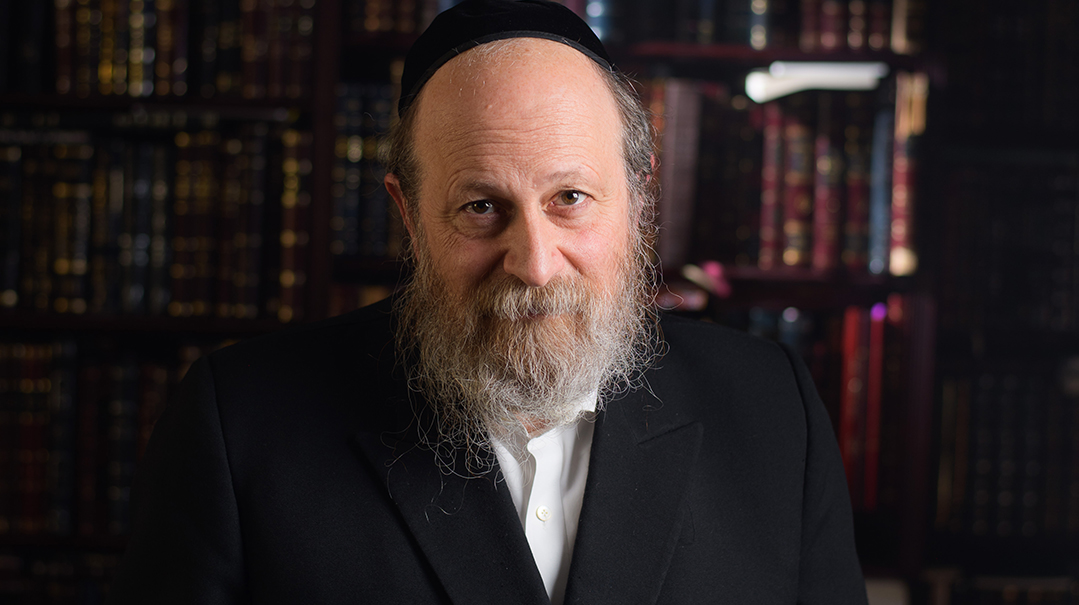
One Shabbos about a year ago, I joined Seudah Shlishis at Yeshiva Ateres Shimon in Far Rockaway, an extraordinary place bursting with young men who maybe didn’t have an easy time of it, who’d fallen or been nudged out of the system. The yeshivah has welcomed them, reassured them, restored them, and there, in a darkened room, the Rosh Yeshivah, Rav Mordechai Yehuda Groner, was speaking to the boys lining both sides of a long table.
He was talking about the eternity of the neshamah, of its essential purity, and he suddenly cried out, “You guys saw the tefillin. You saw them. You know that those are your tefillin too.”
I had no idea what he was talking about, so after the derashah, I asked the boy next to me. There was something resolute in his eyes as he told me that the bochurim had joined the Rosh Yeshivah on a shivah call a few blocks away, where they had been menachem avel Rav Moshe Weinberger, spiritual leader of Woodmere’s Congregation Aish Kodesh, who was mourning his father. And there, they had seen the tefillin of Mauthausen — the straps that had given their owner ropes to climb above the pain and despair — and in his words, I heard a different story: A bochur who had never been beaten by a Nazi, never been forced to stand straight in freezing rain for roll call, never been crammed into a cattle car, but still carried wounds. He had both his parents and lived in a privileged generation, but in a way, he too was alone.
And the tefillin in that house? They were his tefillin too.
Create a free account to keep reading.