When Charlie Press enlisted in the US Army in 1945, he became an unwitting witness to the horrors of history in the waning days of World War II. But it took nearly 50 years until he was ready to talk about it.
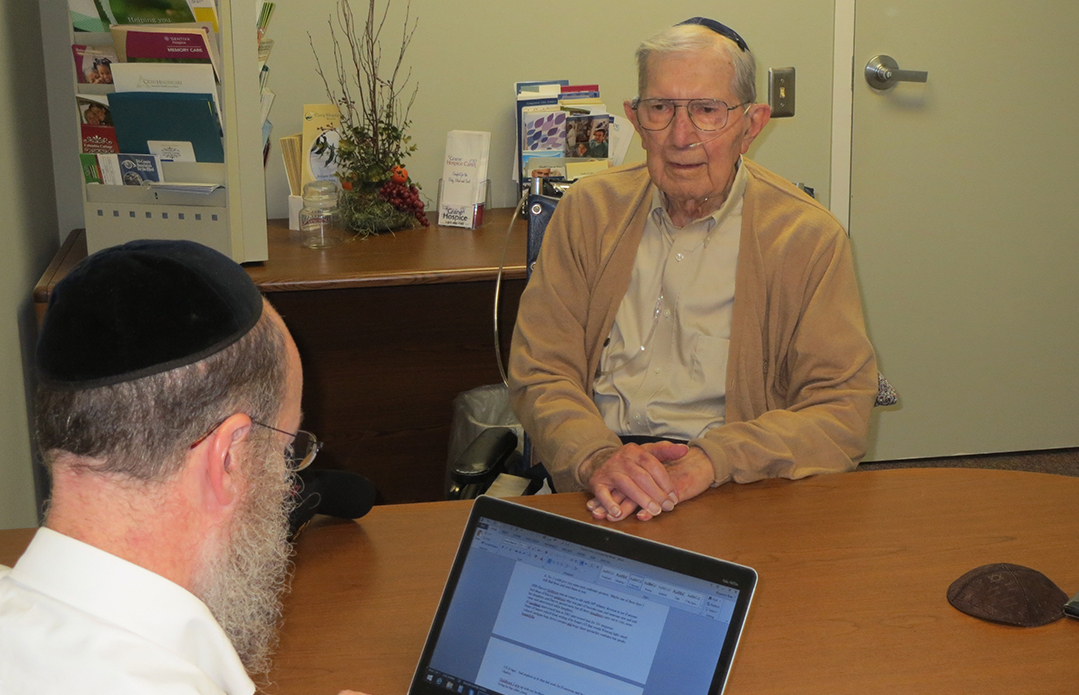

Private First Class Charlie Press may have been a late conscript to the 90th Infantry Division in the waning days of World War II, but for the remaining survivors of the Flossenburg Concentration Camp in Bavaria, his arrival couldn’t have come a moment too soon.
The division had been trailing General George S. Patton’s army during its advance through Germany in the winter of 1945 — an advance that would bring the war to a close with the defeat of Nazi Germany.
Until 1944, Flossenburg was mainly a forced labor camp and counted few Jews. In the last six months of the war, though, nearly 25,000 Jews — mainly Hungarian and Polish — arrived. As US forces approached the camp, in mid-April 1945, the SS began the forced evacuation of prisoners. An estimated 7,000 died en route, while thousands of others escaped, were liberated by advancing US troops, or found themselves freed when their SS guards deserted during the night.
By the time Charlie’s unit arrived at Flossenburg, only about 1,500 of the most infirm people had been left behind. Unaware of the full scale of the Holocaust and Germany’s concentration camp system, it didn’t take long for it to dawn on him that this had to have been a place where the Germans were killing people. “We knew we were going to fight for the US. We really didn’t know anything else until we got there.”
Create a free account to keep reading.