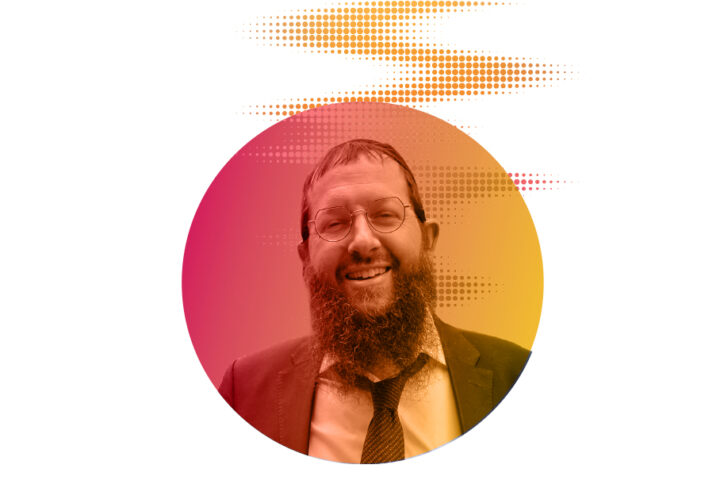
With deep rabbinic lineage rooted in both Brisk and Kerestir, his future as a Torah leader was all but assured
Hungary’s yeshivah world was a rich tapestry of institutions that wove together diverse communities, traditions, and learning styles. While Lithuanian-style yeshivos often dominate the narrative of prewar Torah learning, Hungary, Romania, and Slovakia were also home to a robust yeshivah culture, shaped by the disciples of the Chasam Sofer and further enriched by chassidic influences.
A short distance from Satmar, in the small town of Toshnad (Tășnad), a towering institution emerged — Yeshivas Maharam Brisk, named for its founder, Rav Mordechai Brisk (1886–1944). Though less known today, during its prime in the late 1930s, the yeshivah was among the largest and most prestigious in the region.
A common misconception holds that the prewar yeshivah world comprised merely 5,000 students, a figure often cited to highlight the explosive growth of Torah learning in the post-Holocaust era. In reality, this number applies specifically to the Lithuanian-style yeshivos in Poland under the Vaad Hayeshivos. A broader view reveals a vastly larger Torah world, with yeshivos spread across Poland, Galicia, Hungary, Romania, Slovakia, and beyond.
Hungary alone boasted an extensive network of Torah institutions, stemming from both chassidic and Oberland traditions. Most Hungarian yeshivos operated as local kehillah institutions under the purview of the town rav, and were therefore quite small in size. Yeshivas Maharam Brisk stood apart, growing to an impressive 300 students — making it one of the largest yeshivos in all of Hungary and Romania.
Create a free account to keep reading.