Bubbles make us think of dreams and hopes and rainbows and fun and summer. Join me as we find out more about bubbles,Bubbling Over,Bubbles make us think of dreams and hopes and rainbows and fun and summer. Join me as we find out more about bubbles
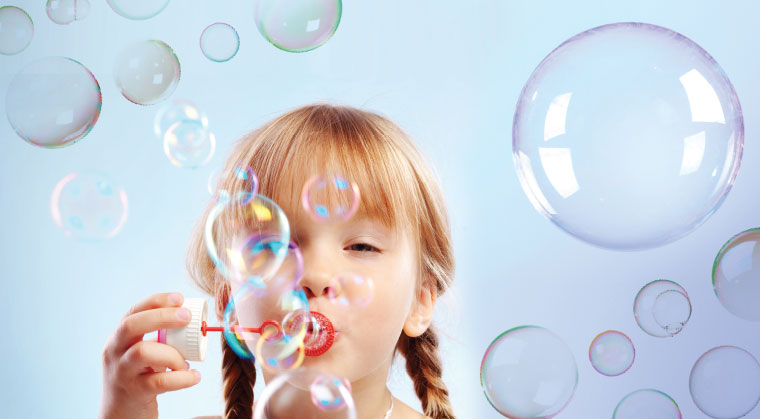
When soap and water are mixed together and air is blown into the mixture the soap forms a thin skin or wall that traps the air. It’s really soap that helps make bubbles because soap makes the surface tension of the water weaker than it normally is. It forms a very thin skin that’s more flexible than water. When air gets trapped under the surface of the mixture of soap and water the flexible skin stretches into a round shape making a bubble. Bubbles can be found in many places beyond the little bubble jars with bubble wands. You might even sometimes see small bubbles in plain water in soda soap and shampoo. Try this: Wet your hand and then touch a bubble… Did it burst?!
Have you ever turned on the faucet to pour yourself a glass of water… and the top half of the water in your cup is completely white or cloudy? As you watch the water turns clear. This is caused by microscopic air bubbles which are caused by dissolving gases in the water. As the water warms to room temperature the gases slowly come out of the water via the tiny bubbles.

Crack open a can of Coke or Pepsi and start drinking and you’ll hear the fizz and taste the bubbles. Why is soda so bubbly? Soft drink manufacturers include up to 1200 pounds of carbon dioxide gas per square inch in their drinks. When you open a can or bottle the carbon dioxide molecules quickly rise to the surface and escape. That’s also why if a can or bottle was already opened it might still taste good but it’s not fizzing anymore. It’s flat… No more carbon dioxide no more bubbles.
If you want to get clean or wash your dishes you’ll see bubbles in the air. Why? The simple explanation is that soaps — whether dish soap bar soap liquid soap shampoo or even laundry detergent — all contain certain chemicals called foaming agents. These foaming agents also act as surfactants which reduce the surface tension of water. That means that while the soap is breaking up dirt on the skin or dishes and allowing it to be washed away it’s also forming bubbles. (Plus you’ve got to admit bubbles make the chore of washing dishes much more fun!)
Create a free account to keep reading.