Can virtual conventions fire up the 2020 race?
Oh, well. I guess I’ll have to cancel the reservation for my hotel room in Milwaukee, which I booked months ago. I already had to cancel my reservations for Charlotte, North Carolina, where the GOP convention was originally scheduled to take place. Instead, Republicans are now planning to hold their convention in Jacksonville, Florida. But things are already looking murky: The Sunshine State registered over 10,000 new coronavirus cases on Saturday, 515 of whom were in Duval County, where Jacksonville is located. It is hard to see a scenario in which the event will take place as it was initially intended.
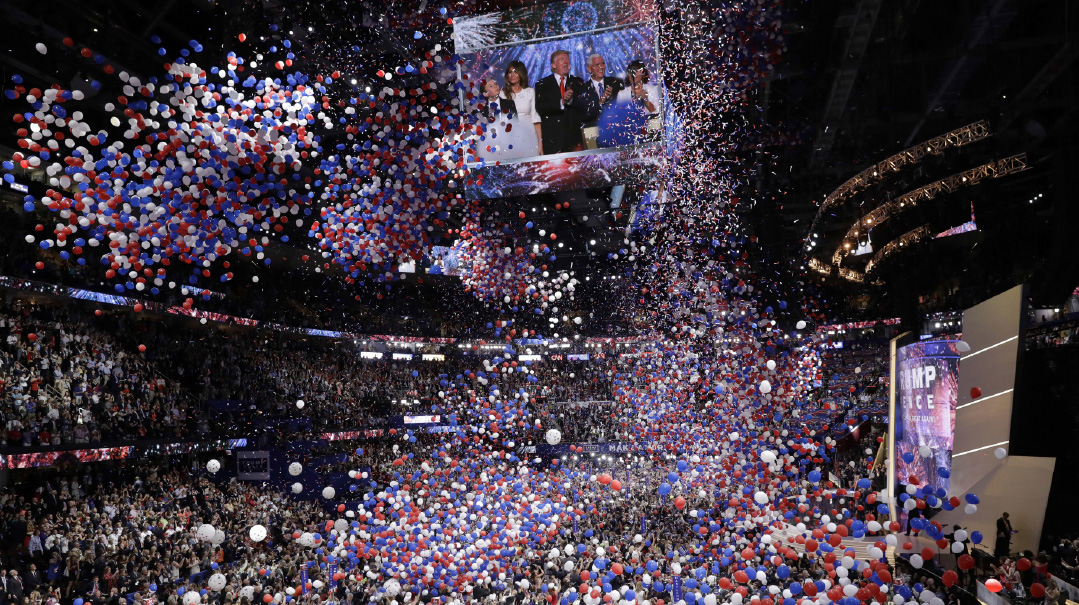
All of this is a shame, because political conventions are events not to be missed. I vividly recall both the Democratic and Republican conventions of 2016, which were large, complex undertakings that welcomed about 50,000 participants each. There were vendors selling political paraphernalia on the streets, political celebrities causally walking the convention grounds, talk show hosts shooting the breeze with attendees, and senators glad-handing with Mr. and Mrs. American Voter. This year, both events will be a shadow of themselves, and American democracy will be lesser for it.
As much as Donald Trump is at his best before large audiences, partisans will be reluctant to attend such a large gathering with coronavirus in the midst of its second wave. The conventions next month, therefore, are going to be different from any others in modern American political history. In normal times, the nominees get a bump in the polls following the conventions. But will the new convention format produce a similar result?
Robert S. Erikson, a professor at Columbia University who specializes in American political behavior, told Mishpacha that party conventions tend to have outsized influence on political behavior. “The conventions matter,” he said. ”Almost always, the party leading in the polls right after the conventions ends up winning the popular vote in November, although not always in the Electoral College.”
Create a free account to keep reading.