Is Israel's police force scapegoating chareidim?
How quickly things change.
Mere months after Israel flattened the first coronavirus wave to world acclaim, with an early lockdown that featured heartwarming interactions between Bnei Brak residents and paratroopers, the country has become a COVID-19 basket case and chareidi-secular relations are on the rocks.
When the story of that deterioration is told, two moments are likely to stand out. One is the viral video that emerged last week of a 13-year old chareidi girl walking along Jerusalem’s Sarei Yisrael Street, looking after two little siblings, and being stopped by police for not wearing a mask.
“If you don’t tell us who you are,” they tell the crying girl, “we’ll have to take you to the police station.”
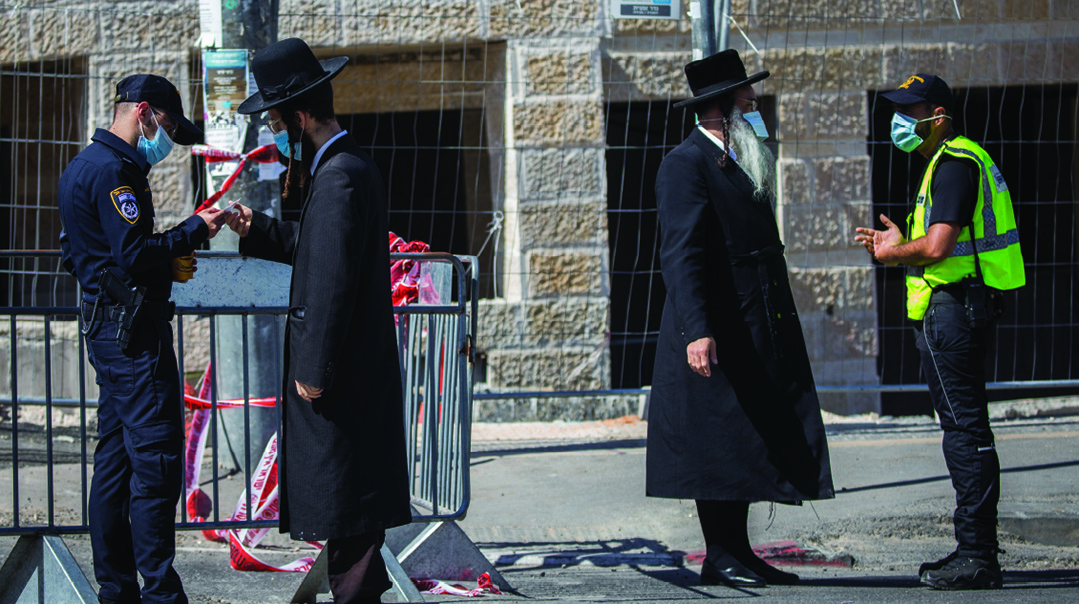
The incident that police later admitted was “foolish” generated widespread sympathy across Israel for perceived heavy-handedness in the enforcement of regulations. But on the chareidi street, it was a totemic moment that — rightly or wrongly — crystallized a sense that chareidim were being singled out for special treatment in the pandemic.
Create a free account to keep reading.