Could a Lapid-Bennett government destroy Israel's religious status quo?
Seventy-five years after the State of Israel’s founding fathers set the country’s religious status quo in stone, is the putative Lapid-Bennett coalition about to commit unprecedented vandalism on the Chief Rabbinate’s control over halachic standards?
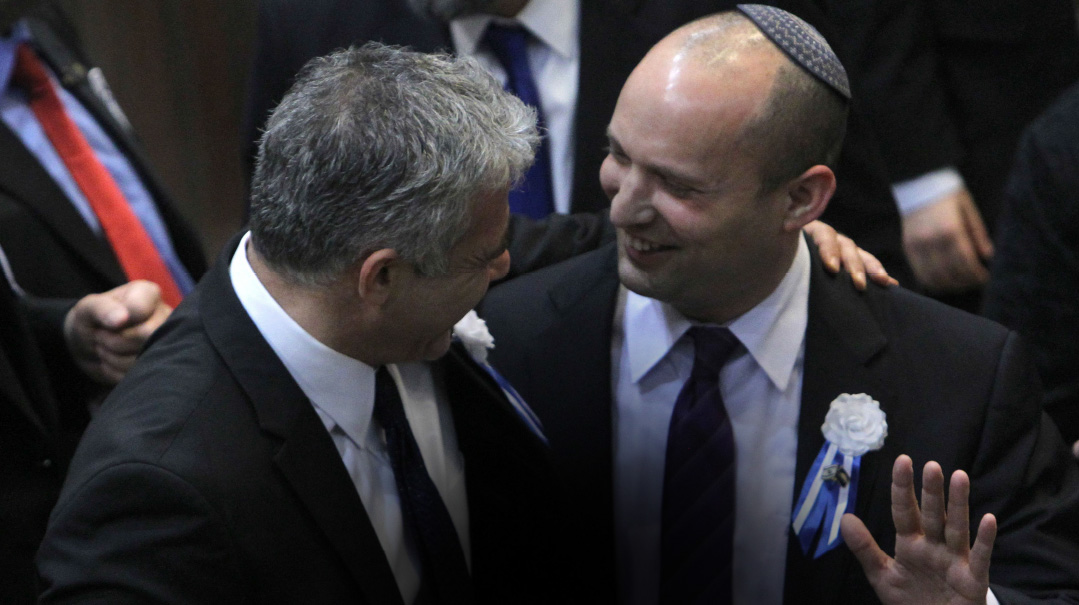
Weary with the endless political deadlock, after Bibi failed at his fourth attempt to form a government, Israelis have just handed the keys to the strangest coalition ever to receive the presidential mandate. Covering the political spectrum from left-wing Meretz to Bennett’s right-wing Yamina, the potpourri was cobbled together with the prime purpose of getting Netanyahu out of power. With Bibi now seemingly out of the way, the only thing that binds the motley group together now is a collective wish to radically liberalize everything from giyur to appointing rabbis.
As of this writing, it’s unclear whether Naftali Bennett and Yair Lapid will succeed in forming a government. Even if they do, it remains to be seen who will serve as religious affairs minister. Bennett and Lapid are trying to walk a fine line between appeasing their supporters on the religious affairs issues and trying to bring the chareidi parties into the governing coalition, to give it much-needed stability and broaden its support.
One figure who prefers to keep the chareidim out of the new government is New Hope MK Ze’ev Elkin, who wants to put the religious Zionists in charge of issues of religion and state. Yamina, meanwhile, has put forward reformist Matan Kahana as its favored candidate for the religious affairs post. According to sources within the chareidi parties, Yamina has agreed with Lapid and Lieberman that on issues of religion and state, the government will follow the positions of the religious Zionist rabbinic group Tzohar, which is considered more liberal than the Rabbanut. Among their aims: approving the Nissim Commission recommendations on halachic conversion, ending the rabbinate’s monopoly on kashrus certification in accordance with the positions of Tzohar, and appointing a religious Zionist figure to the post of chief rabbi.
Create a free account to keep reading.