What, if anything, is the legacy of the Eichmann trial?
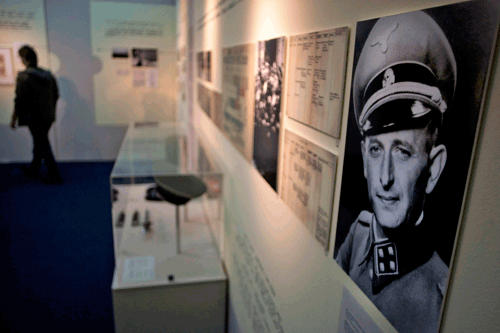
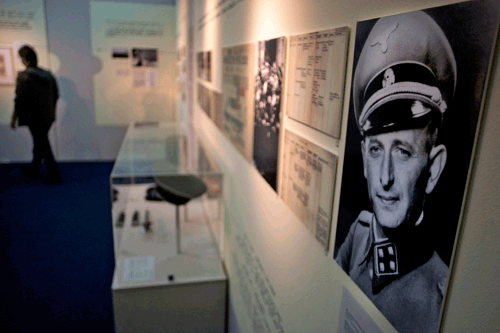
It was only fifty years ago and yet in many ways the world that was during April 1961 seems like light years away.
Much of the front page news concerned the tense relations between the United States and the USSR. On April 12 for example the Soviet Union won the first round of the space race when it sent cosmonaut Yuri Gagarin into orbit. A week later the United States staged an abortive attempt to overthrow Fidel Castro’s socialist regime in Cuba and the dismal failure of the Bay of Pigs invasion helped pave the way for the Cuban Missile Crisis some eighteen months later. It was all reported not by the Internet nor by texting but by means of grainy black-and-whites images in daily newspapers or on national TV or by what was then the newest technological toy on the block — the transistor radio.
Yet it was also during April 1961 that the standoff between the planet’s two superpowers was momentarily put on hold and the gaze of the world shifted east to Jerusalem. There in the newly built George Behar Auditorium also known as Beit Ha’Am (House of the People) former Nazi commander Adolf Eichmann was escorted into a bulletproof glass booth on April 11 and charged with crimes against humanity and the Jewish people by an Israeli court of law. During the fourteen weeks that followed the world would learn a new word — “Holocaust” — and hear heartrending eyewitness testimony from some one hundred Jews who had survived that Gehinnom.
The trial though was not without controversy. Detractors — Jewish and non-Jewish alike — attacked both the trial’s legitimacy and its tactics. And even today half a century later the Eichmann trial and its legacy are still being written about and debated sometimes passionately — including in a new book by Professor Deborah Lipstadt titled The Eichmann Trial (Nextbook/Shocken Books) which has provided much of the factual source material for this article.
Create a free account to keep reading.