“For me, it was never about the beat and the rock and the volume”
I
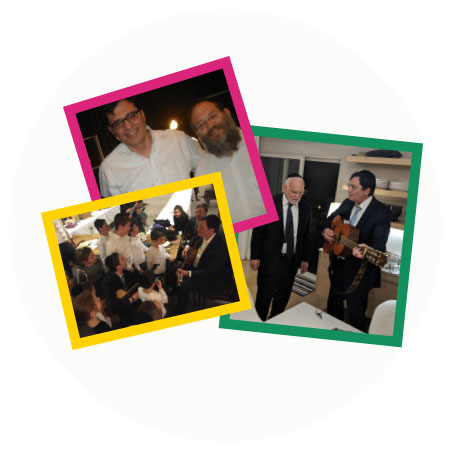
f you’re still humming those classic early Ali Scharf songs from the 1970s and ’80s, then you’re definitely dating yourself. But you’re also probably looking back warmly at an era when the Jewish music scene was less crowded, arrangements were instrumental and nonelectronic, intros signaled your favorite hits, and unhurried ballads were sung and resung endlessly at camps and youth groups.
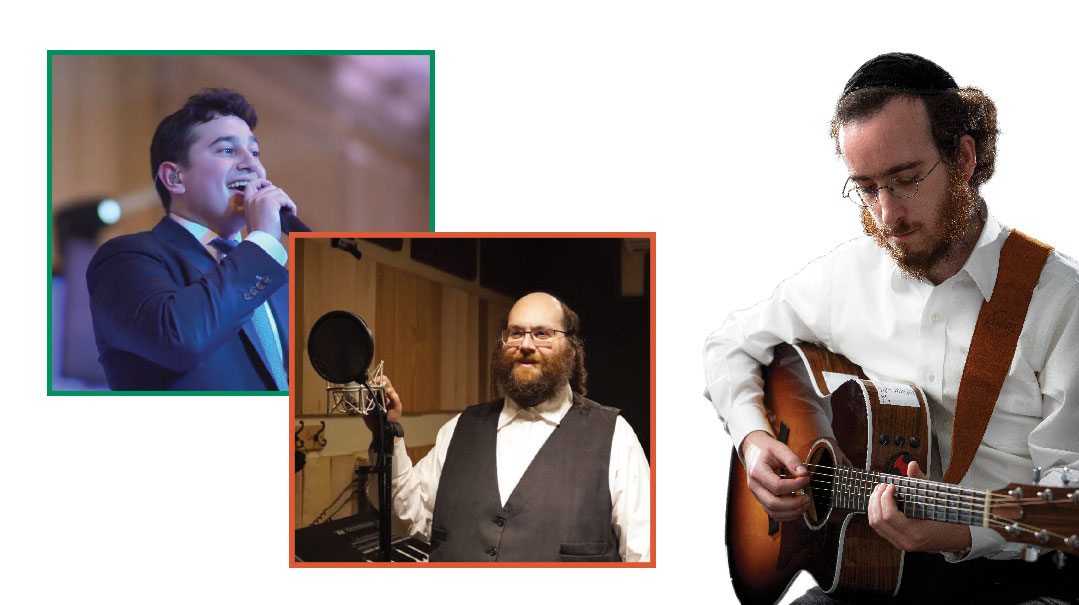
“For me, it was never about the beat and the rock and the volume,” says Ali Scharf, composer, songwriter, and singer, who’s most familiar to more contemporary audiences as the songwriter for the four Schwebel, Scharf & Levine albums, a collaboration with Rivie Schwebel and Dov Levine. (The last album came out in 2011, after a decade’s break.) “It was about the longing, and the melody. I want every song I compose to have a chiddush, either a novel chord combination or a fresh meaning in the lyrics.”
Scharf considers Rabbi Baruch Chait and Abie Rotenberg as his musical mentors. “Abie consistently writes beautiful melodies, and he never repeats himself. Both he and Baruch Chait ‘build up’ their melodies musically — and both of them had been influenced by Carlebach, the ultimate musical genius. Those hundreds of melodies he produced using just three chords, with simplicity and genuine originality, are at the center of Jewish composition today.”
Ali Scharf and Rivie Schwebel joined up musically years ago, but they were friends even before. Ali had been composing since he was bar mitzvah age, with his songs appearing on the vintage Pirchei, Neginah, JEP, and D’veykus albums. He composed the tune to the classic “Ish Chassid” on JEP II (1975), as well as the accompanying English words so many children of the 1970s grew up with (“One night a man knocked on my door, at a glance I could see he was poor… Remember my child as long as you live, to people in need tzedakah to give…”); and who could forget the leibedig “Bo Eshbos” (“Veshivisi Hashem likrasi…”) from Pirchei 5, or the guitar-strumming “Va’ani Sefilasi” from D’veykus 2?
Create a free account to keep reading.