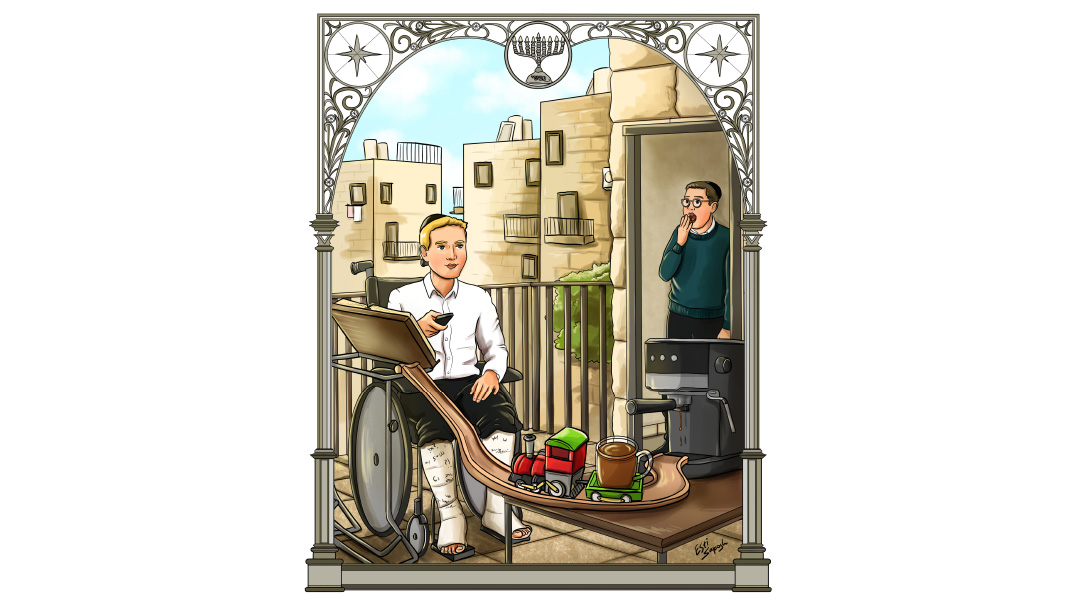
My stutter didn’t just turn up one day, like it does for some people after a traumatic event — it’s been with me for as long as I can remember

“I’m cccc-cccc-cccc-ollecting fff-ooo-rrrr….” I don’t get to finish my sentence before a dollar bill is impatiently thrust into my little collections purse by a woman, and the heavy grey door is firmly shut in my reddening face. Welcome to life as a stutterer.
Most people don’t need to think twice before picking up the phone to make a phone call. Most people have no need to agonize before they approach a saleslady or thank the bus driver. I do. While my four sisters are loud, extroverted, and talkative, I measure my words as if they’re gold. That’s because of my stutter, too.
My stutter didn’t just turn up one day, like it does for some people after a traumatic event — it’s been with me for as long as I can remember. I stuttered my way through the alef-beis and the ABCs. I didn’t know that “stuttering” was what it was called, of course. I just knew that while Ruty and Bayla could open their mouths and speak, I opened my mouth and… things took longer. I stuttered at school, and stuttered at home, and slowly I began to realize that I was different from everyone around me.
My parents and teachers realized I was struggling, too. I went to speech therapist after speech therapist, missing school every Tuesday afternoon (during my favorite art class) and every three Thursdays (during my worst math class, yay!) to do countless exercises to help me get the words out. I practiced speaking ultra-slowly, stopping on letters I found the hardest to say, and had special breathing techniques to gain clarity in my syllables.
Create a free account to keep reading.