Once a hunted child, Rebbetzin Shulamis Wolpe became a builder of souls
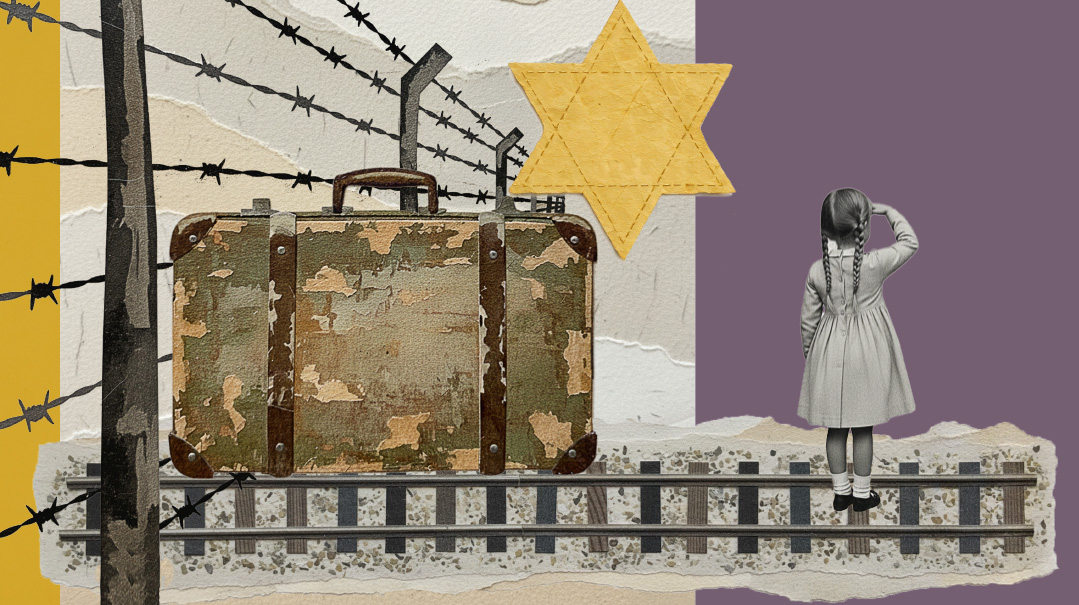
When Rebbetzin Shulamis Wolpe was four years old, her parents, Reb Leib (Aryeh Malkiel) and Sarah Yehudis Hy”d Friedman, hosted Rav Elchonon Wasserman ztz”l in their home. At one point, he turned to little Shulamis and asked her for a brachah. “A child of that age has pure speech, and thus her brachos have power,” Rav Elchonon said.
It was through the power of her pure speech that Shulamis stayed alive and stayed sane as she was tossed from hiding place to hiding place during the years of the Holocaust and managed to smuggle herself into Eretz Yisrael from Europe at the war’s end. And she continued to utilize her power of speech to become a successful mechaneches and later menaheles of Bais Yaakov Shiras Chana in Tel Aviv, and a sought-after speaker who shared her experiences as a child survivor of the Holocaust.
Rebbetzin Wolpe is the youngest of three sisters — her oldest sister was Rebbetzin Rishel Kotler a”h, wife of Rav Shneur Kotler of BMG in Lakewood, and the next was Rebbetzin Rochel Sarna a”h, wife of Rav Chaim Sarna of the Chevron Yeshivah in Yerushalayim.
“I didn’t really remember Rishel from my childhood,” Rebbetzin Wolpe tells me from where she’s seated on her couch in her apartment on Rechov Maimon in Bnei Brak, a small table piled with sifrei kodesh, a Nefesh Shimshon on top, in front of her. “She was much older than me. I was four years old when, the day after getting engaged during Chanukah of 1940, she followed her chassan, Rav Shneur, and escaped Europe. Later, as an adult, I visited her a number of times in America, and all the pictures I have of my father”—she points to the wall opposite, and I turn to see a framed black-and-white photo of a bearded man with the same striking square jaw as she has—“and my mother”—this time she points to a picture above the tapestry couch, a picture of the same man with a woman in a sheitel curled 1930s-style, sitting at a table covered in a white lace tablecloth, two young girls standing beside them—“are copies of photos she took with her when she left.”
Create a free account to keep reading.