This community shul in suburban Paris taught me what being a Jew is all about

T
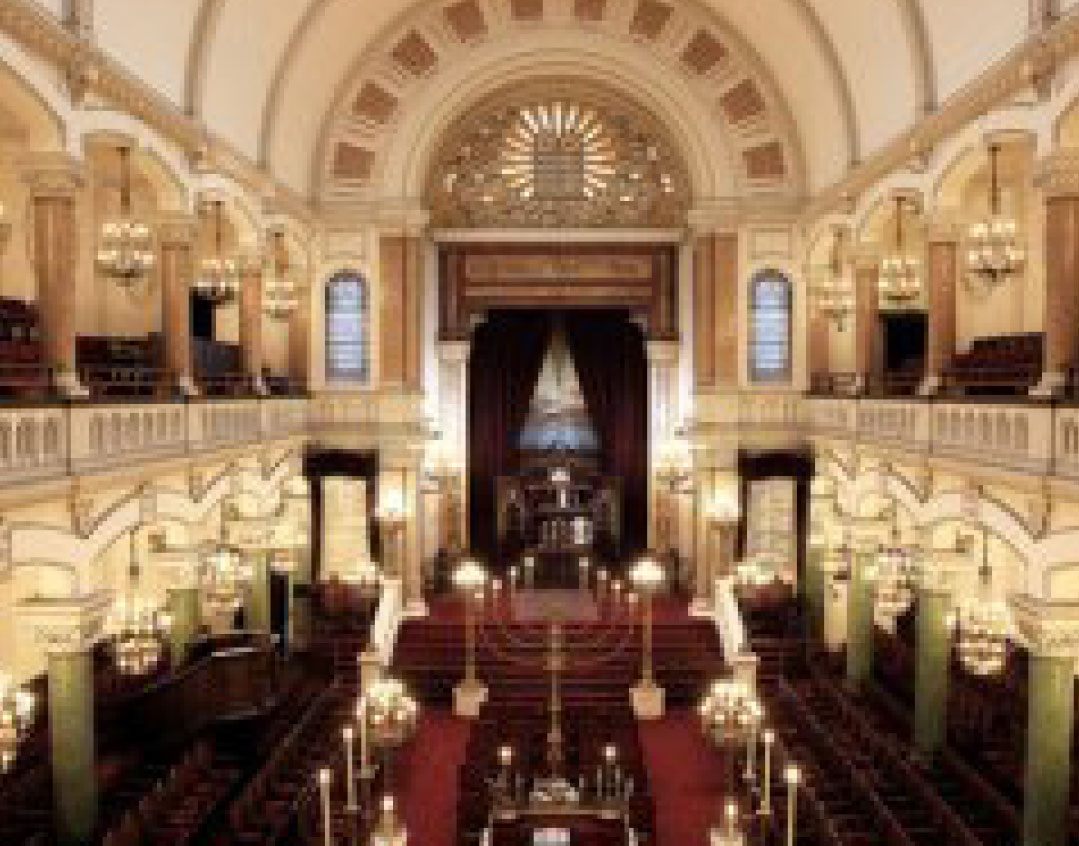
he Ashkenazi shul has stood in Vincennes, a western suburb of Paris, for well over a century. Through its doors have passed many families of storm-tossed Jews fleeing the conflicts that redrew the map of Europe over that time span.
That shul, the Synagogue de Vincennes, was my spiritual home for most of my life — at least until I moved into Paris proper and joined the Adath Israel congregation. Today, the cities of Vincennes and Saint-Mandé are thriving, and it is estimated that up to 30 percent of their population is Jewish. Vincennes is an upper-middle-class community offering a magnificent park (whose lake attracts up to 1,000 people, myself included, for Tashlich), an abundance of kosher stores, and a secure refuge for the many Jews leaving the eastern Paris suburbs in search of safer ground.
The Synagogue de Vincennes belongs to the hundred or so shuls affiliated with the Consistoire de Paris — that is, the main religious body of Orthodox Jewry, of which I was privileged to serve as director of public relations and fundraising back in the 1990s. There are many reasons why this shul is special to me: This is where I first started davening and learning. This is the shul my future wife, Hanna Perl, and my father-in-law, the Yiddish linguist Alex Derczansky, used to attend, and where my two kids later went to Talmud Torah. And finally, this is one of the last congregations faithful to the nusach of the Rhine Valley. Many members have family roots in the Alsace region or in the German areas of Saar or Baden-Wurttemberg; others have roots in the Frankfurt area.
Back in 1871, when the Prussians defeated France, in the course of uniting Germany under their rule, they decided to annex the French regions of Alsace and Lorraine. Those provinces were only returned to France following the 1918 armistice in World War I, but were later reclaimed by the Nazis from 1939 to 1945. The first annexation resulted in many Jewish families fleeing to Paris and other cities in France, to avoid becoming citizens of the German Empire. In 1901, there were enough Jews in Vincennes originating from Strasbourg, Colmar, Metz, and smaller kehillos in eastern France that the Consistoire decided to build a synagogue dedicated to their needs. The philanthropist Daniel “Osiris” Iffla, who also financed five other landmark synagogues around the world, including those in Tunis and Lausanne, funded the project, and the shul was inaugurated in 1905.
Create a free account to keep reading.