An accumulation of geo-political crumbs and scraps of social commentary— the detritus of a second messy pandemic year
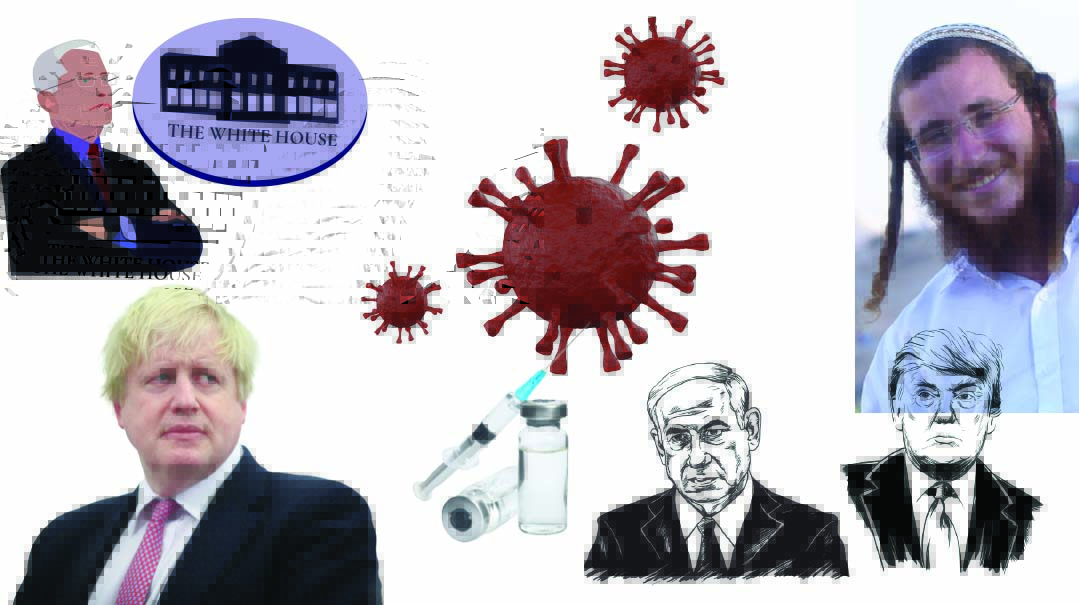
First, a related musing: Ever wondered why news rarely happens on weekends or when politicians are vacationing? Barring the odd Friday hurricane or August Taliban takeover, the 24-hour news cycle seems to run out of steam at intervals that conveniently coincide with politicians’ time off. In Israel, business booms after political faction meetings on Monday, and in the UK, things get jolly after Prime Minister’s Questions on Wednesday. In other words, much of what dominates the airwaves is manufactured. Takeaway: Politics doesn’t deserve the prominence we as a community have given it recently.
That said, President Trump’s defenestration of Bibi was a vital public-interest story that we’ve probably not seen the last of. Most worrisome is the former — and possibly future — president’s impatience at Netanyahu’s lack of interest in making a deal with the Palestinians. But for anyone (not me) with a C-suite office view all the way to Ramallah from Mishpacha’s new HQ high up in Givat Sha’ul, that ignorance of the reality on the ground is dangerously naive.
Fifty miles north of Ramallah are the ruins of what was called Chomesh, a yishuv in Samaria destroyed by the Sharon government in 2005. It was the site of a terror attack last week in which Yehudah Dimentman, a student in Yeshivat Chomesh, was killed. Days later the yeshivah caravan — built illegally — was destroyed by the army despite the pleas of the bereaved family. The tragedy on the remote hilltop was a symbol of Prime Minister Naftali Bennett’s recent transformation: In a deep embrace with left-wing and Arab parties, the once-hawkish politician ended the year by destroying a settlement symbol.
Pictures of the slain young father of one, his peyos-framed face beaming, featured in chareidi outlets such as Mishpacha’s Hebrew edition. It was another sign of the times: as a secular-Reform-religious-liberal alliance has taken shape under the Bennett government, there are signs of closer ties between the chareidi and Chardal (chareidi national-religious) worlds. Are we witnessing a historic convergence? A lot still separates the two publics, but the rise of the Chardal sector, which prizes long-term Torah study, high halachic standards, and a conservative view of the religion-state issues besetting Israel, makes this a relationship to watch.
Create a free account to keep reading.