When children shoulder age-inappropriate responsibilities, they can mature into adults with serious emotional scars. How to recognize and treat the imprint of parentification
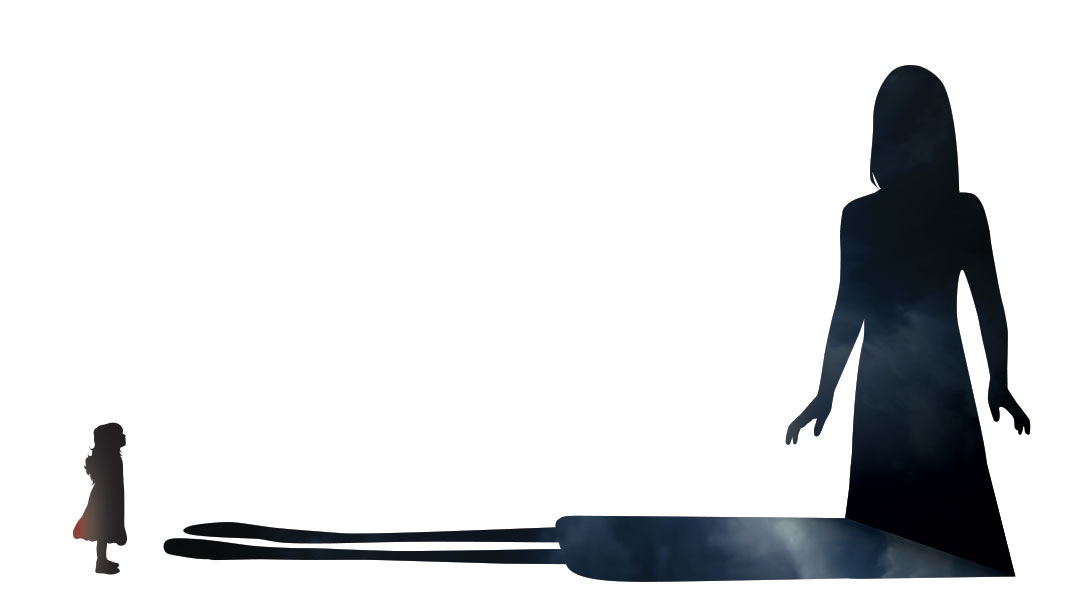
When Talia was 11, it never occurred to her that there was anything strange about her making Pesach while her perpetually unwell mother rested in the recliner nearby and issued instructions. That was the pattern of her life; Talia mothered her younger siblings, none of them ever receiving physical affection or verbal affirmation from their mother.
With the perspective of decades and the help of supportive therapists, Talia realizes her mother was never a parent toward her.
“I chalish for a mother,” she says, her voice breaking. “Once, as an adult, I visited my parents for Shabbos, and the table was set; I cried for hours. For once, she did something for me. I was the child and not the adult.”
A common term for the role reversal that Talia experienced is “parentification.” While popular, the term does not appear in the DSM, notes Michelle Halle, LCSW, and has the unfortunate tendency to become an overused buzzword.
Though it has no clinical definition, parentification describes the process of children taking on age-inappropriate adult responsibilities, whether emotional (such as becoming a parent’s confidant or replacing the emotional support formerly provided by a deceased or divorced spouse) or physical (such as shouldering an undue burden of responsibility for shopping, housework, or childcare). As the word implies, the parentified child is forced to grow up too fast, becoming the parent in the relationship with either a parent or sibling.
Frequently, these relationships can be precipitated by some sort of loss in the family. It could be the loss of a parent, leaving a void in either the physical functioning or emotional well-being of the home, or the loss of a sibling, which creates a pressure on the other children to spare their parents any further emotional anguish.
Parentification can also occur when one parent is unable to manage their responsibilities for any reason, such as physical or emotional illness.
Esther, the only child from a marriage that was both her parents’ second, was younger by far than any of her half-siblings. On a practical level, she ran the house. Her mother started a business when Esther was in high school, so Esther routinely took responsibility for Shabbos cooking and cleaning. When her married half-siblings needed something taken care of, they would call her rather than one of her parents.
As the only one home, she became the therapist for her parents’ volatile marriage, and her mother frequently poured out her marital woes to her youngest daughter. If she didn’t seem to be taking her mother’s side actively enough, her mother would become upset and berate her for her callousness. Her mother’s pain took center stage, leaving Esther with no one to share her own feelings with throughout her adolescence.
Esther was only 13 when the heaviest emotional burden landed on her — her parents separated, moving to different floors of their home. They told her they were only staying married because of her. Esther remembers experiencing a rare moment of candor and telling her mother, “Get divorced if you want, but leave me out of it!” But it took years before she realized how abnormal the situation actually was.
The dysfunctional patterns of her home life manifested themselves in unhealthy friendships from her teen years and on, though neither she nor her loved ones recognized it at the time. “I was always there for everyone,” she remembers. “It was my job to fix everything, and it became a very destructive pattern in my life. I was always the savior in my friendships and didn’t need anything in return.”
Her friendships had no boundaries in place, and, mirroring the dynamic she knew from home, the young men she was drawn to were always needy and unavailable.
Eventually Esther ended up with a dating history strewn with toxic relationships with narcissistic men. At that point she finally took a long, hard look at her life. “What’s the pattern here?” she asked herself. “I’m the common denominator.”
It took still more painful years, working with a series of therapists and self-help tools, for Esther to untangle the baggage of her past. With courage and help, she faced the realization that her parentified upbringing, which had seemed so normal at the time, had left her with poorly-defined personal boundaries, a habit of putting her needs last, and working herself to the bone for a crumb of others’ approval.
Monica Werczberger, a certified codependency recovery coach, sees Esther’s story frequently in her work with clients. “There’s a small child inside who never got to be seen, heard, or feel safe,” she says, describing the typical parentified child who has developed codependent tendencies as a result. “As an adult, you become more disconnected, lose touch, and the inner child doesn’t trust you anymore. You let people step on you, and you don’t set boundaries.”
Tzivy Reiter, LCSW, Director of Children’s Services at OHEL, encounters parentified children frequently in her work. Often, the very reason children are in foster care is that one or both parents cannot fulfill their physical or emotional needs. Frequently, one child, typically the oldest, will step into the void left by the parent and assume a parental role toward her (or, less frequently, his) siblings.
In the short-term, her peer relationships suffer. Like Esther’s experience, the child may suffer from a lack of boundaries, or else she may be perceived as bossy and overbearing, since she’s used to filling the shoes of the leader in her family.
Her general social skills may also lag, simply because the burden of adult responsibilities prevents her from having fun with kids her age and developing age-appropriate friendships.
However, it’s a mistake to assume that the parentified child is obviously suffering. Often, the child doesn’t know there’s anything wrong with her dynamic and finds a certain level of comfort in maintaining the only status quo she knows. Generally, these kids won’t act out; if anything, they will feel extra pressure to be “good” in order to spare their parents any anguish.
Even when other adults intervene to help out, the parentified child can have a hard time stepping away from her assumed role, says Mrs. Reiter. “Sometimes, if the child is placed in foster care she has a very hard time relinquishing the parental role,” she says. “She may get into power struggles, since that role is all she knows.”
Talia had that experience as a young adult, when it was time for her to leave home. Though she lived at home with both parents, her mother was perpetually unwell, and her father was frequently away for extended periods. As the oldest, Talia felt both a physical and emotional responsibility toward her younger siblings. As an older teen, she shopped with her younger sisters, drove them everywhere, and did all the cooking. Most crushing of all, she was burdened with the perceived need to protect her mother from learning of certain indiscretions her father had committed.
Even when well-meaning acquaintances attempted to persuade her to leave home and allow leadership of the family to revert to her parents, Talia resisted. “I thought this is what oldests do,” she remembers.
With her father’s passing, Talia became still more entrenched in the role of her mother’s caretaker, shooting down any suggestion that the relationship was unhealthy. Even once Talia was married, it was a given that she’d chauffeur her mother, accompany her to appointments, and take care of the bureaucracy that her mother found overwhelming.
Today, Talia still pines for a token acknowledgment of the hard work she pours into caring for her mother, but from the time she made Pesach at 11 through her adulthood, it was taken for granted that she’d cater uncomplainingly to her mother’s every need.
It took several years and multiple therapists before Talia realized that her troubled marriage and her tumultuous relationship with her mother shared a single root — her untimely assumption of parental roles.
The most serious fallout of parentification often doesn’t manifest itself during childhood or adolescence, appearing only in adulthood. The unhealthy patterns learned in childhood can play out in a variety of ways.
Dina became a perfectionist, insisting she doesn’t need or want anyone’s help. She naturally gravitates toward men who are unavailable and will gladly accept her caretaking, such as addicts or workaholics. She lavishes care on self-centered others who do not return her concern. Perri, on the other hand, wants her husband’s help with everything and can’t make an independent decision, because she’s learned that meeting others’ expectations is the sole determinant of her self-worth. Chana is burnt out and uninterested in mothering, having spent too many years doing it prematurely.
Occasionally, notes Mrs. Halle, the parentified child grows into an adult who resents her responsibilities and indulges in the carefree lifestyle she never got to experience at the right developmental stage. Angry over the loss of her childhood, she regresses to that stage.
The child who was so focused on the parent’s needs may never have learned to identify or express her own needs. She may have learned that she wasn’t allowed to have her own feelings, much less share them with the fragile adult in her life.
Talia followed a typical path for parentified children. Unfamiliar with the dynamics of healthy relationships, she married someone who reflected her father’s unavailability: a husband who, years later, was diagnosed with a substance-abuse problem, and the concomitant challenges in maintaining open communication in a relationship.
“We want a close relationship,” she says of parentified children, “but when it’s handed to us on a silver platter, we run, because we don’t know how to deal with it.”
Create a free account to keep reading.