The obvious dizziness was gone, and the slow-but-steady hearing loss was easy to miss.
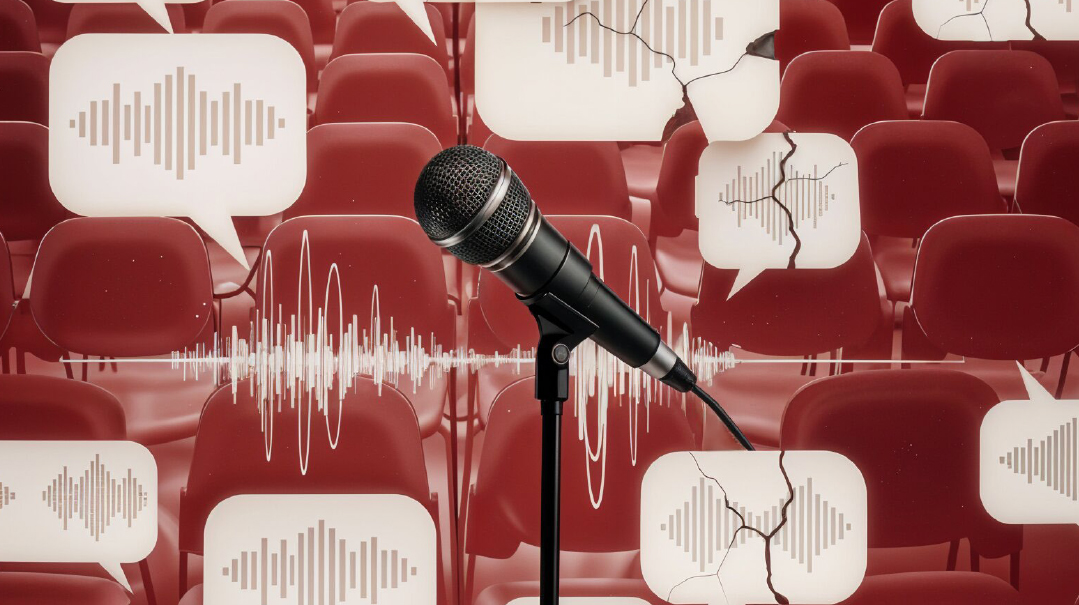
Despite Michal Horowitz’s severe bilateral hearing loss, a spontaneous shiur she gave as a merit for a sick family member became a full-time calling. Today, she teaches Torah to people around the world
I began life with normal hearing. I was born in Toronto in 1976, 30 years after the Holocaust ended. All four of my grandparents were survivors, and I was the eldest grandchild on both sides of the family. The Toronto community was mostly founded by Holocaust survivors, and I grew up in a world created by those who’d rebuilt from the ashes of Europe.
My childhood was unremarkable, with loving parents — an attorney father and a stay-at-home mother — and three younger siblings. I went to Eitz Chaim, the community school, and then to Bais Yaakov High School.
In ninth grade, during the 1990-1991 school year, my parents took a sabbatical, and we lived in Yerushalayim. It was a wonderful year of connecting to Eretz Yisrael, new experiences, and growth. But it was also the year a seemingly mild medical event affected me in ways no one would understand for a decade.
I vividly recall the dizzy spells. I’d be sitting at the kitchen table, and suddenly I’d become intensely dizzy. It wasn’t the swift disorientation-and-settling of standing up too quickly, but a number of brief but intense episodes that left me feeling confused and off-kilter.
My mother took me to a doctor who didn’t take my episodes too seriously. The Gulf War was raging, Scud missiles were falling, and the diagnosis came quickly: Stress. War nerves. Nothing to worry about.
“Go home, it’s fine,” the doctor told us dismissively.
Because the episodes soon stopped, we believed him.
When the year was over, we returned to Toronto, I entered tenth grade at Bais Yaakov, and life continued as usual — almost. Because something had changed in the recesses of my inner ear where balance and hearing live side by side. The dizziness was most likely caused by an inner-ear virus, though I wouldn’t learn this until I was deep into audiology school. And while my balance system was affected in the short term, my hearing was affected in the long term.
The obvious dizziness was gone, and the slow-but-steady hearing loss was easy to miss.
Compensate
At first, the hearing loss was mild enough that I could convince myself that nothing was wrong.
I was academically driven, the kind of student who sat in the front row and took copious notes. When I couldn’t catch everything my teachers said, I obviously needed to focus harder. When conversations with friends became ever-so-slightly more difficult to follow, I learned to watch their faces, relying on context and visual cues.
One summer when I was in high school, I worked in a busy, bustling office, complete with typewriters and fax machines. My job was mostly typing documents and filing papers, but when the receptionist stepped away from her desk, I had to answer phones.
I remember sitting at that desk, the dread heavy in my stomach, a receiver pressed to my ear, struggling to understand what customers were saying on the other end of the line. Was it the phone quality? The background noise? People asked me to transfer calls or take messages, and I’d panic, because I genuinely couldn’t hear.
In group settings with friends, I’d sometimes miss nuances of what was said. Perhaps subconsciously, I was beginning to realize something was wrong with my hearing. But nothing was catastrophic enough, and the truth felt so improbable that my mind wasn’t ready to accept the reality.
I reveled in my seminary year at Michalah in Israel, returned to the States, and after one year at New York University in Toronto, I got married in June 1996. We moved to Brooklyn, where I enrolled at Brooklyn College for a Bachelor of Science in Speech and Hearing.
Why did I end up choosing audiology over speech pathology? I have no idea. At the time, it was just a decision, one path among several. Today, I know it was pure Hashgachah. By the time I was a few semesters into my undergraduate work, the hearing loss had progressed enough that I couldn’t ignore it anymore. The breaking point came in the college classrooms. In the days before laptops and iPads, the low-tech notebook and pencil were king. I had to write everything down… but I also needed to see the professors’ faces to understand what they were saying, since by this time, I relied mostly on visual cues to help me hear. I’d look down at my notebook and lose the thread of the class entirely. Look up, and I’d missed three sentences.
I can’t do both, I realized. I can’t watch someone’s mouth and write at the same time.
Something was wrong.
Diagnosis
“I think I can’t hear.”
That’s what I told my professor, Professor Michelle B. Emmer. She was extremely kind and sensitive, and she performed a hearing test in the clinic where we worked with clients. I sat in the soundproof booth, raised my hand when I heard the tones, and repeated words back through headphones.
And when the results came, they confirmed what I’d suspected: I had bilateral sensorineural hearing loss.
I was 24 years old. Our son was three.
Maybe I should have been shocked, but I only felt a sense of relief. I’d been living with an uneasy feeling for ten years, and this diagnosis didn’t upend my world — it explained so much. I wasn’t functioning properly with regard to my communication, and now I knew why. More importantly, there was a solution. Professor Emmer explained that there were very small, discreet, in-the-ear hearing aids that could help (I can’t wear those anymore because they’re not powerful enough for my current degree of hearing loss…).
I bought the hearing aids. I wore them. And life continued.
Around the same time that I was helped by hearing aids for the first time, my husband and I were facing another challenge… secondary infertility. Our oldest son was still our only son, and this emotionally painful struggle occupied far more of my mind than adjusting to hearing aids.
I knew secondary infertility wasn’t the same as primary infertility. After all, baruch Hashem, we had a child. But it was harder for me than the hearing loss, which had come gradually over ten years. Infertility involved appointments, procedures, hope, large sums of money, and the constant longing to have another child.
Our son waited for a sibling, as we waited for another child.
Training
I finished my bachelor’s degree and continued straight into the master’s program in audiology at Brooklyn College. The program was rigorous, with excellent professors and high expectations. We had to do externships at four different hospitals, working in audiology departments under the supervision of certified audiologists.
We conducted hearing tests, counseled patients on different hearing aids and devices, and provided aural rehabilitation — teaching people how to cope with hearing loss, how to set realistic expectations, how to communicate more effectively, and how to manage the emotional toll. Needless to say, I was good at the job! Patients responded to me because I understood. When someone sat across from me and described the frustration of missing conversations, the isolation of not being able to follow group discussions, the embarrassment of constantly asking people to repeat themselves, I didn’t have to imagine what they meant. I knew.
The irony is that I never ended up working as an audiologist.
By the time I graduated with my master’s degree, I was expecting my daughter, who was born two months before our son’s sixth birthday.
I didn’t want to go to work right away. We had waited so long for her, and now I wanted to be a mother. Before I had a chance to go to work, when my daughter was two, I found out I was expecting twins. It was a high-risk pregnancy, and I had to stay home and be careful — but my twin boys were still born two months premature.
I was 29 years old. We had an eight-and-
a-half-year-old, a two-and-a-half-year-old, and two preemies in the NICU. It was winter and there was a major snowstorm. I was recovering from a C-section, pumping around the clock (critical nutrition for my preemies), driving back and forth to the hospital, and somehow also trying to take care of the other two children at home.
It was a taxing and challenging time. Necessary, exhausting, and all-consuming.
During those roller-coaster years, my husband also faced a significant health challenge, which he, baruch Hashem, overcame. But between the secondary infertility, the high-risk pregnancy, premature twins, and my husband’s illness, my twenties and early thirties were an intense period. It was one challenge after another, with almost no breathing room in between, each crisis forcing me to ask deeper questions about meaning and purpose in my life.
By the time my twins were three and out of the house (in preschool), I wasn’t the same person I’d been in my twenties. Being an audiologist was no longer on my radar. I found myself searching, not for a career, but for something deeper.
Speech?
In December 2010, someone in my family was seriously ill.
A lot of my time was spent visiting the patient in the hospital, davening, and asking myself over and over: What can I do? What zechus can I create for a refuah sheleimah?
I have no idea what inspired me. I’d never given a shiur before. I wasn’t a teacher. Never set foot in a classroom after I graduated. But suddenly I decided I would give a shiur in my home for the women in my neighborhood as a zechus for my sick relative.
I printed flyers on lavender paper and mailed them out. The topic was “My Yetzer Hara: What’s It Doing Here, Anyway?” and I prepared diligently, excited and determined in equal measure.
For about three years before that first shiur, when I was living through my many challenges, I felt like I needed something to anchor me. I’d always been academic, someone who loved learning, but I hadn’t kept up with my own Torah study in any serious way in the first decade of marriage. But I decided that’s what I needed — a dose of learning. I started small, committing to learning the weekly parshah with Rashi from an ArtScroll Chumash. Basic English parshah books piled up on the dining room table, and I read them every week.
So when I decided to give a shiur, I knew where to look to find some basic sources.
About 15 women came. And I enjoyed the experience.
That first shiur happened because I needed to do something to tip the scales toward healing for my relative. But what I didn’t realize, and couldn’t have known, was that Hashem had bigger plans.
After that December shiur, I reached out to a woman in the neighborhood who hosted a weekly ladies’ Shabbos shiur group.
“Can I speak to your group?” I asked her.
She later told me she thought it was ridiculous to allow me to speak, unknown and inexperienced, but because we were family friends, she felt she couldn’t say no.
That shiur was the week of parshas Yisro, on the topic of the Aseres Hadibros. I remember exactly whose house I said it in, the layout of the living room, and the many women who came. It was my second shiur, and I was now on a new path.
After that, I started giving a shiur once a month in my own home. It grew quickly, but I didn’t yet understand what Hashem was building.
Calling
The first institution to hire me officially? The Nautilus retirement community in Atlantic Beach, New York. Before Purim 2011, they asked me to come give a lecture, just once, as a volunteer. The residents enjoyed it so much that the director of recreation called me the following week.
“Can we hire you on a weekly basis?” she asked.
It was a thrilling and humbling moment, and I’ve been teaching there every week since (15 years now).
The residents at the Nautilus are in their late eighties, nineties, and some are even over 100. They come from every Jewish background, ranging from women who grew up Orthodox to people learning Torah for the first time in their lives. Yet despite their different backgrounds, the beauty and wisdom of Torah reaches them all.
One man, who always puts on a kippah for the weekly lecture, appreciates the learning. He recently stood up and said loudly, “We can’t live without Torah!”
And there was a wheelchair-bound woman who used to come to my class (she was 100 years old at the time). After one lecture, she looked at me and said, “Tell me, dearie… how much would you charge me for a private session?”
Moments like that, where I witness what Torah does for a neshamah, regardless of age or background or prior knowledge, make me understand that what I’m doing isn’t just teaching.
A few months after the Nautilus hired me, Aish Kodesh in Woodmere, New York, Rabbi Moshe Weinberger’s shul, invited me to speak for their summer Neshei series. After that, the woman who organized it asked if I’d ever considered giving a weekly parshah chaburah.
I hadn’t.
But when people expressed interest, I sent out an email to gauge if there was sufficient demand. In September 2011, my Tuesday morning parshah shiur began at my house.
From there, the teaching spread.
I currently teach seniors, post-seminary students, and adults of all ages, and give classes and shiurim that range from high-level text-based classes to classes that are on a more beginner level and less text-based. All ages, hashkafos, and levels of observance are in attendance at my classes, where I delve into hashkafah, emunah, the parshah, Yamim Tovim, tefillah, Tanach, and inyanei d’yoma.
Burden
I often joke that it’s a good thing I’m the speaker, not the listener, so I don’t have to worry about hearing — but it’s not entirely a joke.
I live with a severe bilateral hearing loss, and communication is a constant, daily struggle. Questions and comments during and after shiurim are hard for me to hear. My students know they might have to repeat themselves multiple times. Often, someone with better hearing has to step in and help me understand what someone else in class said.
Everyday conversation is frustrating. If someone’s back is turned to me, if there’s background noise, or if someone has an accent or facial hair that obscures their mouth, I can’t decipher what they’re saying.
At the Shabbos table, I’m constantly asking my husband, “What are they talking about?” as hearing and understanding multiple speakers is extremely challenging for me. Following a group discussion, even at my own Shabbos table, is impossible. My husband fills me in patiently, over and over.
The first and most important answer to “How do you function successfully every day, despite your limitations?” is HaKadosh Baruch Hu. His kindness as the “Nosein laya’eif koach,” and the One Who instills within us wisdom, intuition, knowledge, as well as heart and soul, is what guides me and gives me the kochos for each and every day.
The next answer is: my family.
My husband is a person of patience and calm demeanor. His mantra in any situation is, “It’s going to be okay. It’ll work out.” If he needs to repeat something for me three times (or more), he never gets frustrated. My successes as a speaker (and in life) are due — in a very large part — to the assistance, support, care, and patience of my husband.
And my children, as well as our in-law children, are unbelievably patient and compassionate. I believe that growing up with a mother who has significant communication challenges taught my children many life lessons about interpersonal relationships.
The third answer to how I function: technology. Virtual communication, like Zoom and email, has been an enormous brachah in my life. While Chazal teach that adeaf person is patur from mitzvos, today we have technologies that allow people with disabilities to function beautifully, a direct gift from HaKadosh Baruch Hu.
Online platforms allow me to set up shiurim, receive questions from around the world, and teach without relying on my ability to hear in real-time, noisy environments. I hardly ever use the phone.
But what I share often (especially when I speak in schools, where this resonates strongly), is that any disability requires patience. The person with the disability needs patience for him or herself, and the people around them need it, too.
Abled
The idea for my new (first!) book, Abled: Living with a Disability, a Torah View (Mosaica Press, 2025), was a collaboration between me and Mosaica Press.
The book is both a personal memoir and a sefer, written in English, with every Hebrew source translated and explained so that anyone can read and benefit from it, regardless of their background.
Abled is my story, but in reality, it’s everyone’s story. We all go through unexpected challenges. Who lives the exact life they had envisioned for themselves at 18? (I’ve never met them.) We all have to adapt to Hashem’s plan.
I’ve received feedback on the sefer from parents of children with disabilities, from people with disabilities, and from people who never considered this perspective before. Every response has been overwhelmingly positive, baruch Hashem, and I think that’s because when we use the wisdom and guidance of Torah to frame the way we see the world, we touch on the truth — and that connects with everyone.
I used to wear only sheitels when in public. During Covid I discovered beautiful tichels from Byrst Designs — and realized this worked for me. Now I wear tichels almost everywhere (I have a whole tichel wardrobe!), including shiurim, guest lectures, and even Shabbos and Yom Tov.
I’m a devoted Mishpacha reader for personal enjoyment, and I often quote its articles and insights in my classes.
I daven all three tefillos daily. A rebbetzin in Bnei Brak encouraged me to start Maariv during a Pesach trip to Eretz Yisrael four years ago, and I’ve kept it up ever since.