The Chasam Sofer’s hidden map: ancient alleys and the secret to a baffling psak
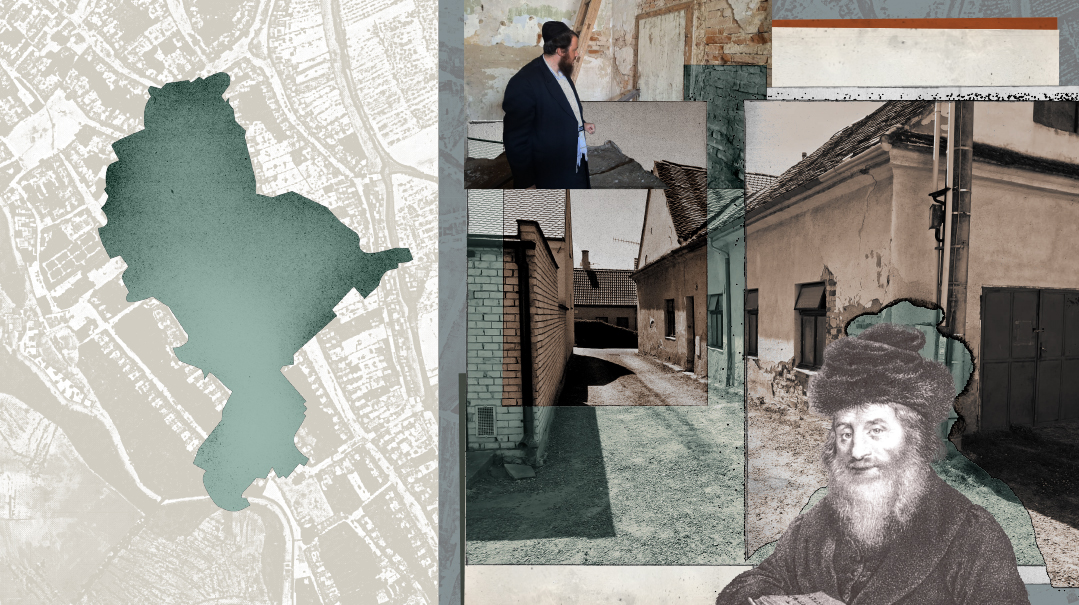
ON a quiet, sunny afternoon in Strážnice, a small town in the Czech Republic, the streets are nearly deserted. An old truck rattles by, its driver staring in confusion at the group of black-hatted men who cluster beside a centuries-old stone house. The men are murmuring excitedly in Yiddish, their hands brushing over the walls as though the stones themselves might speak.
Suddenly, one of them cries out: “Here it is!”
At first glance, it seems absurd. The object of their excitement is nothing more than a protruding stone slab at the back corner of the building — just a weathered piece of masonry. I’ve never seen a crumbling angled pillar create so much excitement, yet to the men gathered, this lump of concrete is the key to a mystery, a confirmation that they’re standing on the very street once walked by Rav Moshe Schreiber, better known as the Chasam Sofer, one of the greatest halachic authorities of the modern era.
Each of the members of our group unfolds the “holy map” — a photocopy of the original page from Sh’eilos Uteshuvos Chasam Sofer. This page is dense with Hebrew text, written in Rashi script, and at first glance it seems to hold nothing but an intricate discussion of some particular laws of eiruvin — the regulations governing whether and how one may carry objects in a public area on Shabbos. Yet hidden in its lines is a surprising treasure: a detailed description of the Jewish quarter of Dreznitz (today’s Strážnice), preserved as it existed more than 230 years ago when the Chasam Sofer served for several years as rav of the town.
Create a free account to keep reading.