Who would have believed that a group of young, inexperienced yeshivah bochurim were the catalysts to help so many young people become frum?
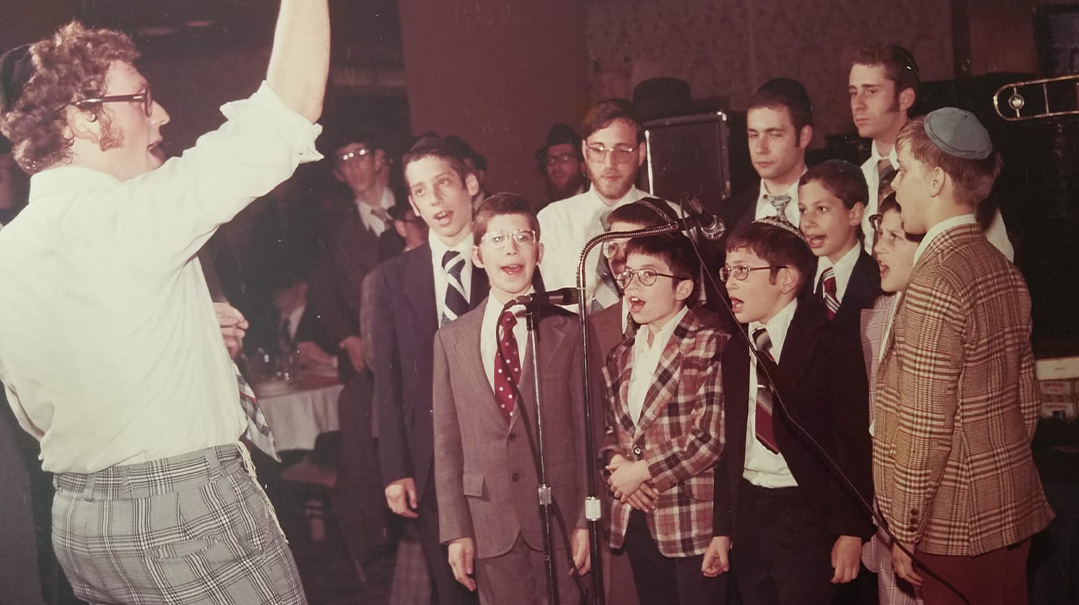
After we’d run a lively JEP (Jewish Education Program) shabbaton on Long Island in early 1973, Rabbi Mutty Katz approached me with an idea: As one of the children had a great voice, and as more of our songs used original English lyrics that public school kids understood, maybe we make a record?
And, if the record took off, the proceeds would go to establish a JEP scholarship fund to help subsidize tuition payments for public school children who agreed to make the switch to yeshivos.
At that stage of my life, I had zero experience with Jewish music, other than Color War grand sings in Camp Kol-Ree-Nah. Nevertheless, I approached my talented chavrusa, Moshe Hauben, a longtimer at Camp Agudah, and the two of us decided to jump in. We asked some of our Camp Torah Vodaath friends to join us in a strategy meeting to see if we could assemble ten Color War songs with Torah values. Joining us was Chaim Schmell, who had written “Six Million Tears” for a music night in Camp Torah Vodaath a couple of years earlier. He’d be a great choir leader… but we didn’t yet have a choir.
We then approached Isaac Gross and Yisroel Lamm of Neginah Orchestra fame, who loved our idea and worked with us on a shoestring budget of slightly over $5,000. But we didn’t have that kind of money either.
Create a free account to keep reading.