TORAH → FOR THE RECORD Issue 1055 · March 26, 2025

Industrial Pogrom

TheTriangle Shirtwaist Factory blaze claimed the lives of 146 workers, mostly young Jewish women
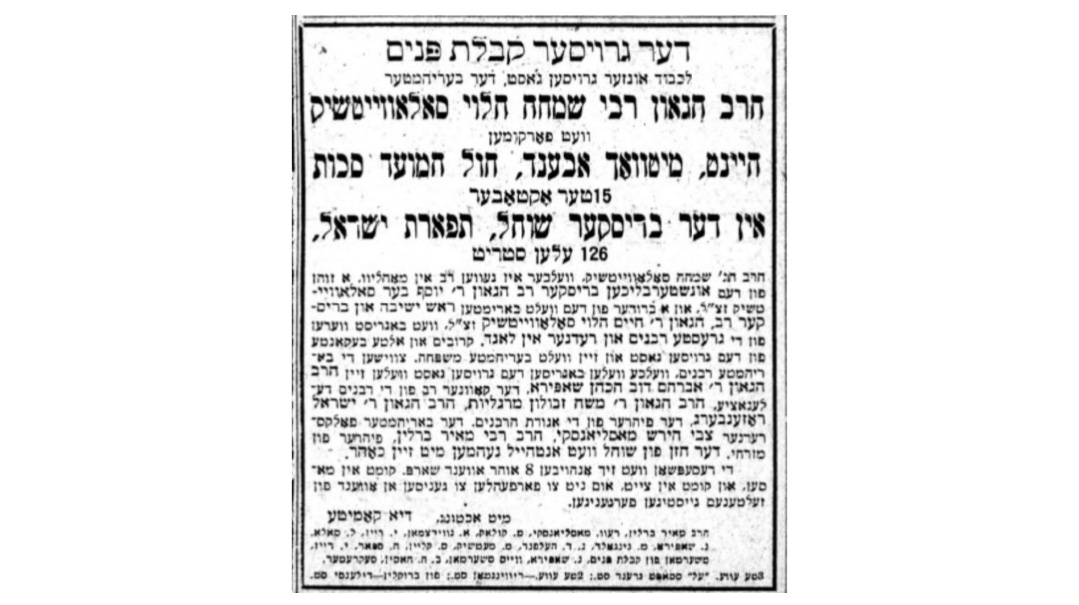
Industrial Pogrom
Title: Industrial Pogrom
Location: New York City
Document: The Forward
Time: March 1911

One hundred forty-six workers had perished in the fire, all but 21 of them girls, the great majority of them Jewish. “The Morgue Is Full of Our Dead,” said the banner headline in a special edition of the Forward put out that same evening. “The Whole Jewish Quarter Is in Mourning.”
All through that night and into the next day, there were terrible scenes of families identifying the victims. Each day thereafter, the Forward printed groups of pictures of those who had been identified, with the words: “Tears fall around these pictures.”
The pages of the paper were filled with tragic accounts, under such headings as: “Funerals instead of weddings”; in one case, a picture of a bride and groom bore the caption: “Becky Kessler, the bride, was burnt to death.”
Seven of the bodies were never identified. A mass funeral was held for the victims on April 5. By this time, the spirit of organized labor had been aroused, and the funeral was turned into a demonstration of workers’ solidarity.
“Come and pay your last respects to our dead,” the Forward urged that morning, “every union man with his trade, with his union.”
It was raining, but a crowd of perhaps a hundred thousand persons marched in silence through the streets of the Lower East Side to commemorate the dead.

—Ronald Sanders, The Downtown Jews

ON Saturday, March 25, 1911, a devastating fire erupted at the Triangle Shirtwaist Factory, a garment workshop situated on the 8th through the 10th floors of the Asch Building near Washington Square in New York City. The blaze claimed the lives of 146 workers, mostly young Jewish women. The horrific tragedy marked a turning point in American labor history, and illustrates the struggles of Jewish immigrants in early 20th-century America, and their resilience.

At the turn of the 20th century, New York City was a beacon for millions of Jewish immigrants, primarily from Eastern Europe. Seeking refuge from poverty, pogroms, and political unrest, they arrived on American shores with the hope of a better life. Yet many found themselves living in overcrowded tenements, struggling to make ends meet in the fast-growing metropolis.

Jewish women would become an integral part of New York’s garment industry. As the city’s garment sector boomed, these women filled the factories, sewing shirts, blouses, and other clothing items under difficult and unsafe conditions. The Triangle Shirtwaist Factory, located on the upper floors of the Asch Building, was no different. It employed more than 600 workers, many of whom were young Jewish women in their teens or early twenties. These women, often recent immigrants, worked long hours for low wages, producing the popular shirtwaists that were in demand in the early 1900s.

Continue reading with Mishpacha.

Create a free account to keep reading.

Everything you need to stay close to Mishpacha.
← Previous installment The Galicia–Vienna–Tel Aviv Express Next installment → An East Side Story