My Shabbos together with over 150 survivors of the Nova Festival
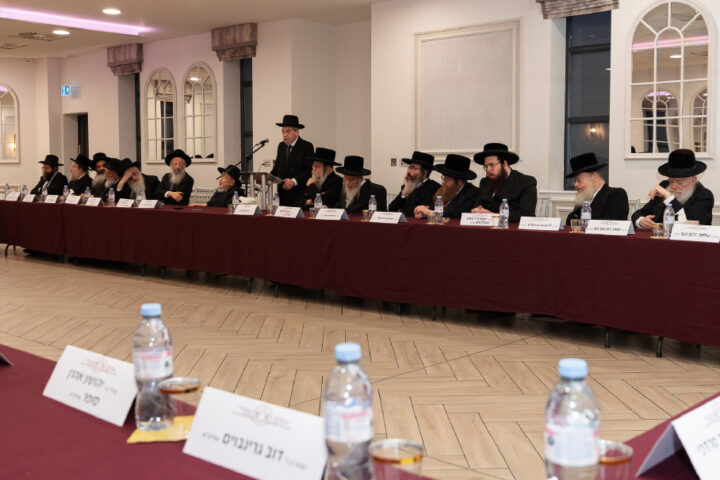
No effort was spared to maximize the impact of the shabbaton. Rabbi Y.Y. Jacobson provided a heavy dose of intellectual stimulation in two powerful derashos. (I confess that I could only envy his rich vocabulary and grammatically sophisticated Hebrew — a stark contrast to my own Hebrew after 45 years in Israel.) The first drashah focused on the essential unity of the Jewish People, a theme stressed throughout Shabbos. One line, from a chassidic master, particularly stood out for me: “There is nothing so whole in the world as a broken heart.”
The second drashah centered on the Jewish response to tragedy: We ask not “why,” lamah — but “for what,” l’mah. What is my task now? That was obviously a crucial message for the survivors, each of whom lost close friends on October 7, and is left to ponder, “Why did my gut tell me to go this way, and his to go the other way?” Yosef Hatzaddik, who told his brothers that while they may have sold him, it was not “you who sent me here, but Hashem,” serves as a classic example of someone who searched for the l’mah in his fate.
Famous musician and songwriter Yonatan Razel had the group — some with tattoos and others already dressed for Shabbos — with their arms around one another’s shoulders within moments of the start of his Erev Shabbos concert. And he did the same at a musical Havdalah to close the Shabbos on an emotional high.
FOR ME, THE EMOTIONAL PEAK of the Shabbos was the talk at the day seudah by Rabbi Yisrael Goldwasser, a Gerrer chassid and well-known historian. He spoke holding a small sefer Torah, which he referred to as a “special guest Holocaust survivor.” His theme was the Jewish People’s power to joyously celebrate their relationship with HaKadosh Baruch Hu, even in the darkest times. He began with a description of the Leviim continuing to sing, even as the Romans broke through the walls of the Temple, in the face of their imminent slaughter (see Arachin 11b).
Create a free account to keep reading.