Israel’s government dusts off the 30-year-old E-1 plan to expand Jerusalem eastward — and Europe isn’t happy
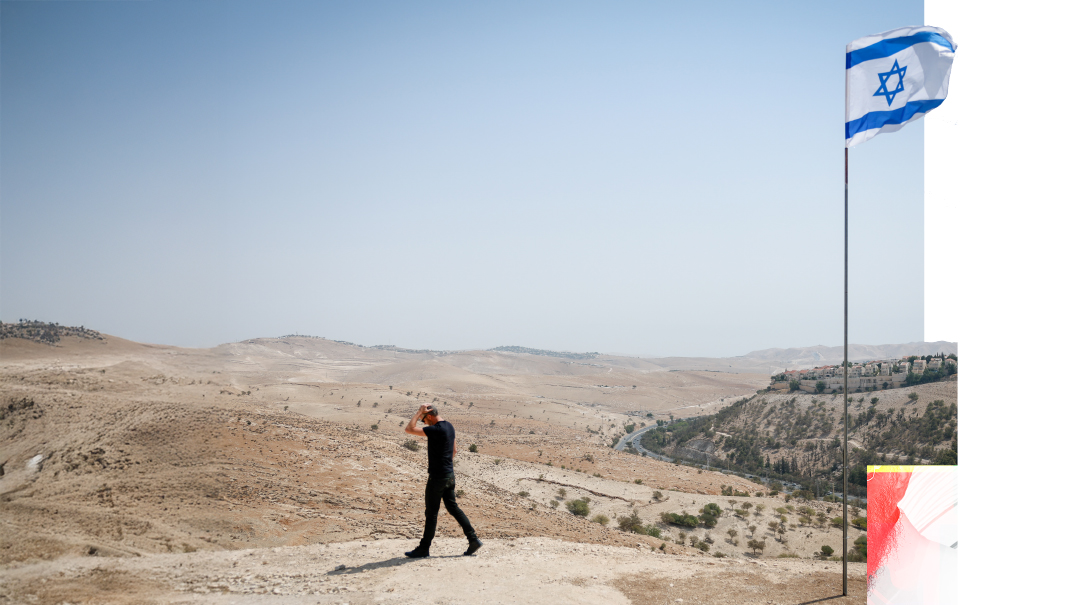
The drive east from Jerusalem along Highway 1 toward the Dead Sea is breathtaking and filled with subtle seasonal changes. During the hot, dry summer, the steep hilltops are bare and grayish-brown, reminiscent of a moonscape. After the first winter rains, those same hilltops are covered in greenish brush, adding color to the scenery.
Bedouin tent villages dot the landscape, and young boys shepherd flocks of sheep and goats grazing on sparse vegetation. Camels stroll across the hillsides. The highway is so steep that drivers must stay in low gear, or risk burning out their brakes or getting a speeding ticket on the descents. One wrong turn and you could end up in an Arab village, as I once did, until two elderly Arab men spotted me and hurriedly pointed the way out.
The city of Maaleh Adumim lies along this highway, just four miles east of Jerusalem, at a key junction connecting the Jordan Valley and the Judean Desert. Mentioned in Sefer Yehoshua (15:7) when delineating the boundaries of the tribe of Yehuda, and resettled shortly after the Yom Kippur War, Maaleh Adumim’s 12,000 acres are home to over 40,000 Jews, religious and secular, and a small but growing chareidi community. One of its notable features is a pedestrian and bicycle trail that offers complete separation and safety from vehicular traffic.
Maaleh Adumim could have been even larger if Israel had carried out the E-1 (East-One) plan, first proposed by Prime Minister Yitzhak Rabin in 1994 to establish a continuous Jewish presence from Jerusalem to the Jordan River Valley.
Create a free account to keep reading.