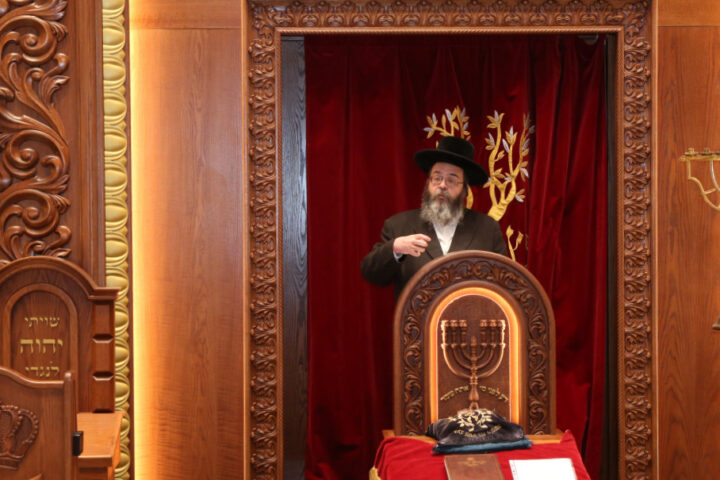
At the moment of death, a soul is born


AS humans, we’re wired to value life and to expend time, money, and resources to ensure it. At simchahs, we lift our wine glasses and say, “l’chayim — to life.” On the Yamim Noraim, we plead with Hashem to write us in the Book of Life.
Death, on the other hand, is shrouded in mystery and often engenders feelings of fear and anxiety. What is the Jewish view of death and dying?
Gesher Hachaim, authored by Rabbi Yechiel Michel Tuchazinski ztz”l, is one of the classic halachic and hashakafic works on this topic. As the name of the sefer suggests, life as we know it is a bridge, beginning with birth and ending with death.
The experience inside the womb is a wonderful allegory for the limitations of what’s outside the world in which we exist. Imagine twins in the womb wondering if there is any existence outside of theirs. One twin, who has a tradition that there is a magnificent world out there, tries to convince the “rational” twin that life in the womb is just preparation for a much greater life outside. The rational brother believes they’re being fed and carried for these few months and that’s the entirety of their “lives.” Then the “naive” twin slips out, and the other twin, hearing his brother’s cries, assumes he has fallen to his demise.
Create a free account to keep reading.