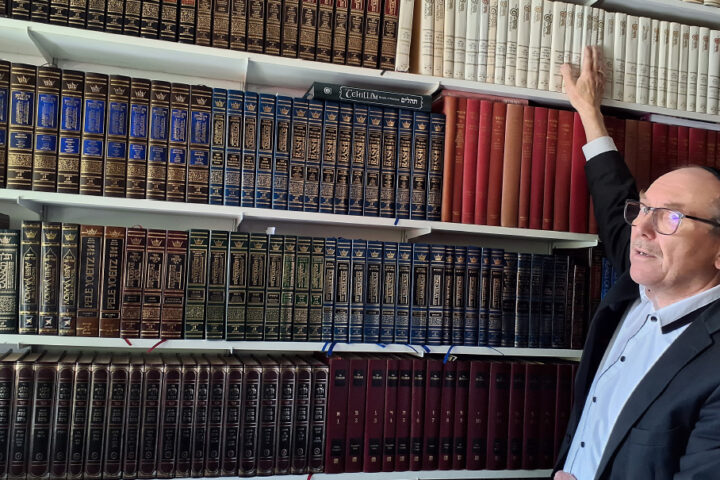
Boro Park is, indeed, as fine a representation of an American-Jewish community as you can find on these shores
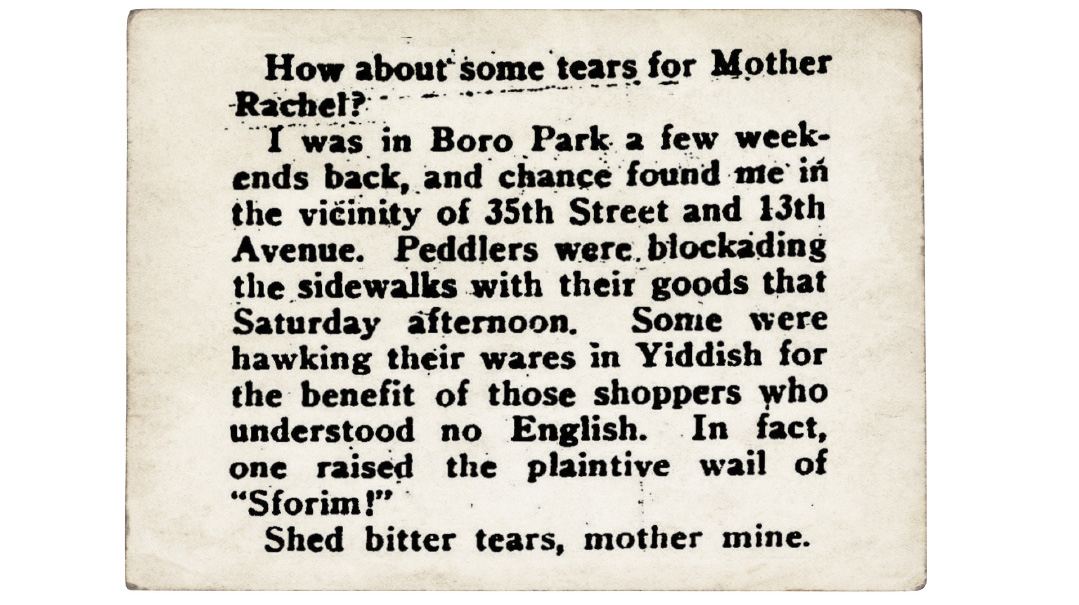
Off the BQE there’s a place called Boro Park, where you can never park on 13th Avenue.
—Country Yossi
AS WAVES OF JEWISH IMMIGRANTS poured into the United States, New York City absorbed the overwhelming majority of the huddled masses seeking a new life. In the 40 years between 1880 and 1920, the city’s Jewish population exploded from 80,000 to over 1.5 million, making it the largest in history. While many later immigrants settled on the Lower East Side of Manhattan or Williamsburg in Brooklyn, earlier arrivals and second-generation Jews sought better lives in less-crowded neighborhoods. From the Bronx’s Grand Concourse to various Brooklyn neighborhoods, a Jewish middle class was emerging from the working-class first generation of immigrants.
Boro Park was one such neighborhood. Back then it was a suburban destination that offered residents abundant open space, farmland, and parks completely unavailable in the densely populated Lower East Side. During the first decade of the 20th century, Boro Park spawned such Orthodox synagogues as Temple Beth-El in 1902 and Shomrei Emunah in 1907, and the Conservative Temple Emanuel in 1908. Additional Jewish infrastructure soon followed in the form of the Hebrew Institute of Boro Park (known to posterity as Yeshiva Eitz Chaim), founded in 1916; the Israel Zion Hospital, later Maimonides; Shulamith School for Girls, and many others.
Concerned residents began to notice that traditional Jewish observance was on the decline. To combat the growing laxity, a group of laymen banded together to found Congregation Shomrei Shabbos in around 1918. Every individual applying for membership was scrutinized by the board to ascertain if he was indeed 100 percent shomer Shabbos.
Create a free account to keep reading.