THE CURRENT → A FEW MINUTES WITH Issue 1037 · November 20, 2024

Middle East Comeback 

Will a friendly administration allow Israel to take out Iran?
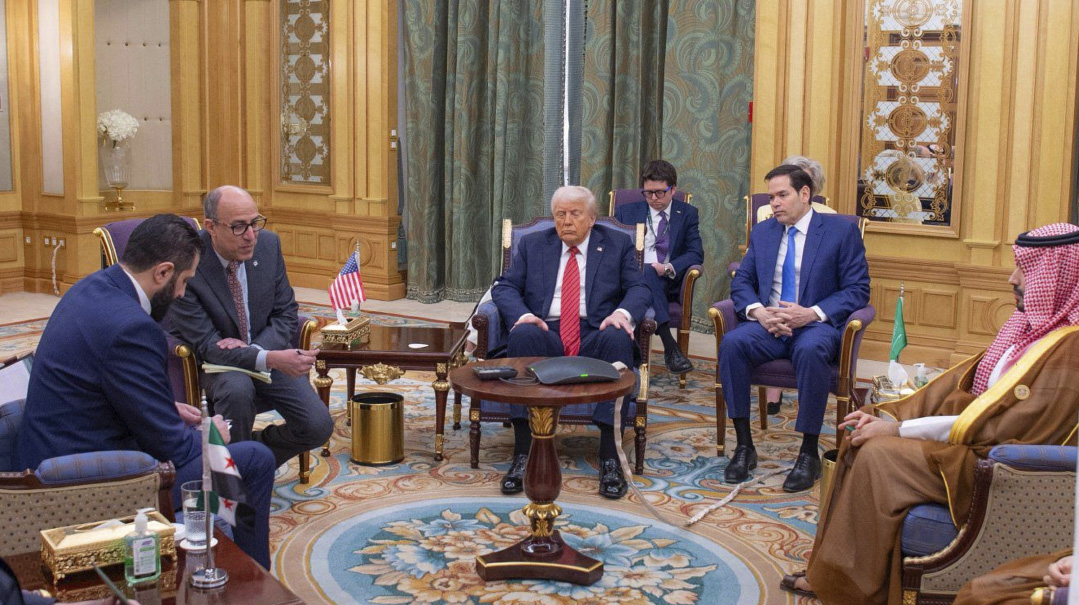
Middle East Comeback 
Michael Doran, senior fellow and director of the Center for Peace and Security in the Middle East at the Hudson Institute and a veteran of the George W. Bush administration, has long warned of the Iran threat and emphasized the importance of Israel to US interests. Dr. Doran has a direct line to many of Donald Trump’s advisors and is hopeful for a more robust US foreign policy, but he sees the incoming administration consciously tempering hawks with voices from the MAGA camp’s isolationist wing.
A Catholic raised in the Midwest and California, Dr. Doran lived in Israel as a young man and picked up fluent Hebrew and a deep attachment to the country. In 2005, he left his Princeton University post to serve on the Bush National Security Council and later as a State Department advisor and as deputy assistant secretary of defense.
He was among the few Bush advisors to embrace Mr. Trump’s first-term approach, urging fellow members of the “expert class” to see past the nontraditional veneer and judge the strategy by its effectiveness.
Dr. Doran shared his views with Mishpacha on what the debate in the new administration could mean for Israel, Iran, and a fraught Middle East.


There has been much talk about the influence of figures like Tucker Carlson and Tulsi Gabbard on Trump’s foreign policy appointments. What are you hearing about the administration’s direction on Middle East policy?

I’m really struck by how supportive of Israel — and how tough on Iran — President Trump’s national security team is turning out to be. The choices he has announced — for national security advisor, secretary of defense, ambassador to Israel, ambassador to the United Nations, director of the CIA, and secretary of state — are making Jerusalem joyous and Tehran nervous.

Having said all that, we can’t forget that within the Trump-aligned Republican Party, there are two distinct strains on foreign policy. One includes figures like Senator Marco Rubio and Congressman Mike Waltz, who hold traditional national security attitudes toward Iran and the Middle East.

The other strain includes the “restraintists,” figures like Tucker Carlson, Tulsi Gabbard, and Elbridge Colby. They are skeptical of military commitments to the Middle East and often suggest that a strategic accommodation can be found with Iran. They are also skeptical of Israel, as the agent that might force the US into a confrontation with Iran. Some of J.D. Vance’s ideas overlap with them as well, although Vance is very supportive of Israel.

We need not be overly worried about this situation. The two strains always existed in the Trump coalition. And what President Trump is going to do is the same thing he did in his first administration — very effectively — which was to straddle them.

Continue reading with Mishpacha.

Create a free account to keep reading.

Everything you need to stay close to Mishpacha.
← Previous installment Diverging Roads Next installment → Question Marks over Syria