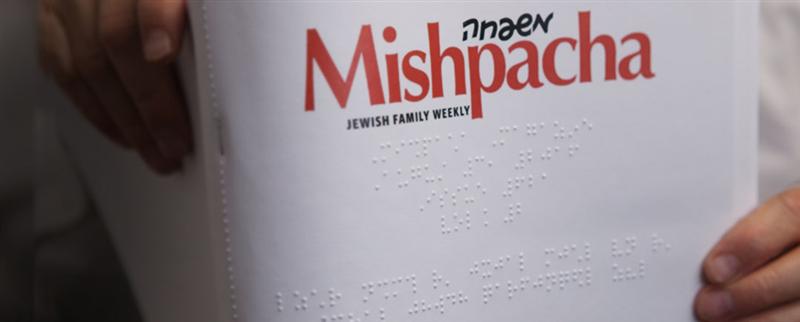
Audio Torah software give the vision-impaired access to an entire library of seforim. But what about on Shabbos? Mishpacha is now available in Braille

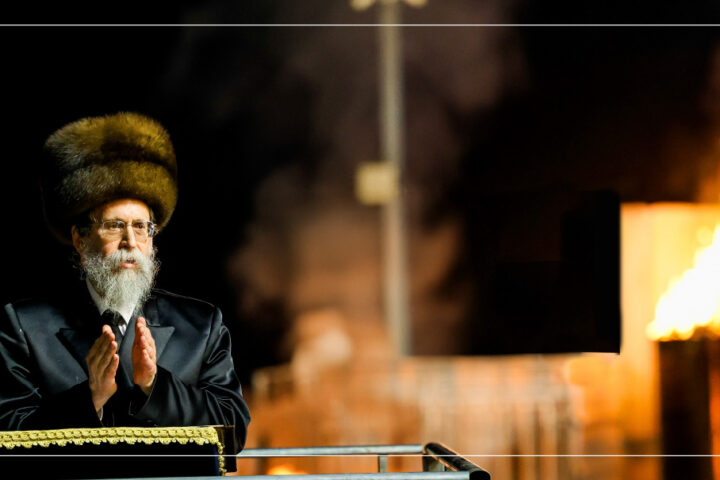
What started as a computer program to help his blind friend became Rabbi Nachum Lehman’s groundbreaking organization. With the Braille magazine “we realized we’d stumbled on an awesome way to help our clients once again” Photos by Amir Levy
With Shabbos ending well past 9 p.m. in the summer there’s a long afternoon to fill — and as the People of the Book many of us are happy to have the extra time to curl up on the couch with some good reading material. But what about the visually impaired? During the week they can now read or listen to just about anything off a computer with the help of special refreshable Braille displays (a sort of keyboard connected to the computer with hundreds of tiny pins that rise and fall as they convert text from the screen into Braille letters) or audio programs. On Shabbos however the computers and those books and tapes are shut off.
“For years we’ve had a void of reading material for Shabbos despite the books we print” says Rabbi Nachum Lehman creator and director of Computer Sciences for the Blind (CSB Care) which prints seforim (including some ArtScroll and Feldheim titles) in Braille. CSB Care has also created custom-designed audio Torah software allowing access to an entire library of seforim for the visually impaired. “We have hundreds of volumes of learning material for men and boys but for the women it’s harder because they’re not learning Gemara. But even the men can’t learn nonstop; they need some relaxing reading material as well.”
All this has just changed though with the introduction of a breakthrough Braille edition of Mishpacha. We at the magazine are so excited about this new venture that we just had to share some of the background with you.
Create a free account to keep reading.