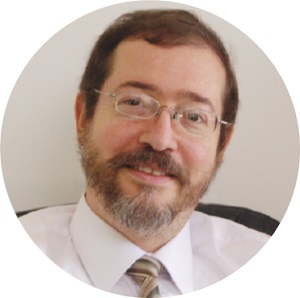
It sounded intriguing: a conversation with Rav Moshe Meiselman, rosh yeshivas Toras Moshe of Jerusalem, whose reputation precedes him as a scion of Klal Yisrael’s leading Torah dynasty, and as a first-rank talmid chacham who has written eloquently on issues facing Klal Yisrael. But none of what I knew about Rav Meiselman quite prepared me for my meeting with him some weeks ago at the Flatbush home that serves as his yeshivah’s American office. In that venue, I came to know a different Rav Meiselman, filling the role that is clearly closest to his heart: a transformational teacher of Torah, standing at the head of one of Eretz Yisrael’s leading yeshivos for American post–high school bochurim.
In a back room hardly larger than a closet, a cocoon of quietude amid a beehive of administrative activity, I listened to the multifaceted Rosh Yeshivah speak — and couldn’t help but wonder what might be the singular animating ideal binding together the variegated strands of his life and life’s work.
Once I grasped what that ideal is, I realized that it is alluded to in his yeshivah’s very name, Toras Moshe. There is, after all, one word that’s closely associated with both “Toras” and with “Moshe,” and that’s “Emes,” — truth — as in the phrase “Moshe emes v’soraso emes.” Teaching Toras emes to his talmidim, giving the broader world a perspective of emes that debunks the societal influences of sheker encroaching on the Orthodox community, modeling emes in one’s personal interactions — all these form a mosaic of truth for which Rav Meiselman’s “Toras Moshe” is a kind of shorthand.
Turnaround Artist
The name Toras Moshe is, of course, primarily intended to evoke the memory of the Rosh Yeshivah’s grandfather, Rav Moshe Soloveitchik, the oldest son of Rav Chaim. But while the Rosh Yeshivah’s family name is Meiselman, it is the Soloveitchik legacy that informs every fiber of his being. He, Rav Michel Shurkin, and Rav Moshe Twersky — who teach alongside him at Toras Moshe — are three of the closest talmidim of his uncle, Rav Yoshe Ber Soloveitchik of Boston, and their shiurim reflect that. Perhaps for that reason, it seems appropriate to ask him what Rav Chaim would say of the derech halimud that prevails almost everywhere in today’s yeshivah world. After all, Rav Chaim is reported to have said that one can’t be a ben Torah unless he learns 40 blatt a month with clarity, and the Brisker Rav added that he’s willing to halve that and settle for a ben Torah learning a monthly quota of 20 blatt in depth. The Rosh Yeshivah’s answer reveals an understanding of the contemporary scene that may help explain why, with so many yeshivos catering to American boys, his institution has continued to thrive and lead the field nearly three decades after its founding. “Those to whom Rav Chaim was speaking were not today’s yeshivah bochurim,” Rav Meiselman explains. “He was dealing in a totally different context. Look, I grew up in Boston, which was a litvishe shtoht, and our family doctor was a man who came to America when he was 14, after having learned in cheder in Europe. In his 70s, he still knew Gemara, Rashi, Tosfos, and Maharsha in the three Bavos baal peh. He hadn’t seen these Gemaros since he was a child, because, nebach, he fell away from observance on his arrival here, but it was in his blood. How many yeshivah bochurim today can say Gemara, Rashi, and Tosfos in the Bavos baal peh? Anyone? And this was not some great genius, he was just the product a certain system.
Create a free account to keep reading.