The growing Jewish community has carved out its own viable niche in the housing market. Developers are cashing in on this trend, providing homes that accommodate the Jewish lifestyle. Pesach kitchen, succah porch — what will it take to make this house your home?
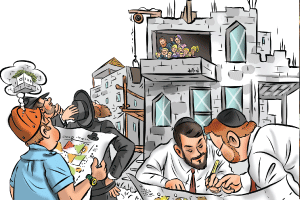
When Aron Ruby moved into his Monsey home 30 years ago its large size made it rare. It had five bedrooms; three kitchen counters for meat dairy and pareve; a living room dining room and foyer; and ornate woodwork throughout. Today the house is a relic of the past dwarfed by its more modern neighbors. Its hallways are considered narrow the dining room can hardly fit a simchah the kitchen counters are tight and the bedrooms lack a dance floor.
What happened? Did his house shrink or did neighboring houses blow up in proportion? It seems that the houses have grown in correlation with the Jewish community. Contractors and developers have learned that “jumbo” “super-sized” and “extra” are effective marketing tags especially when employed with Jewish homeowners.
So how did yesterday’s mansions become today’s hovels? It takes a home to raise a child. How big of a home does it take to raise 12 children? Add a visiting grandfather a married daughter a friendly playdate a shalom zachor crowd and a Shabbos guest to the equation and the space demands of the Jewish family grow — along with the rising bar of what’s considered “basic” and “necessary.”
“Today developers are giving more square footage than before” says Asher Zelig Brodt a Lakewood real estate broker. “In a townhouse the attic is now being developed with two extra bedrooms.” As families grow and as married children come back with grandchildren in tow everyone is looking for extra bedrooms.
Create a free account to keep reading.