While some heretical archaeologists contrive that David Hamelech may have been a tribal chieftain, a new discovery — found right next to where David and Goliath fought history’s most famous battle — refutes this contention
IRREFUTABLE EVIDENCE In 1992 Professor Avraham Biran the first PhD student of Professor Albright discovered the first fragment of the Tel Dan stele. In 1993 another two fragments were found. While the top and bottom of the inscription are still missing the middle rows contain these intriguing words: “I killed 70 kings. I killed a king of Israel and a king from Beit David.” (Photos: Ouria Tadmor)
T
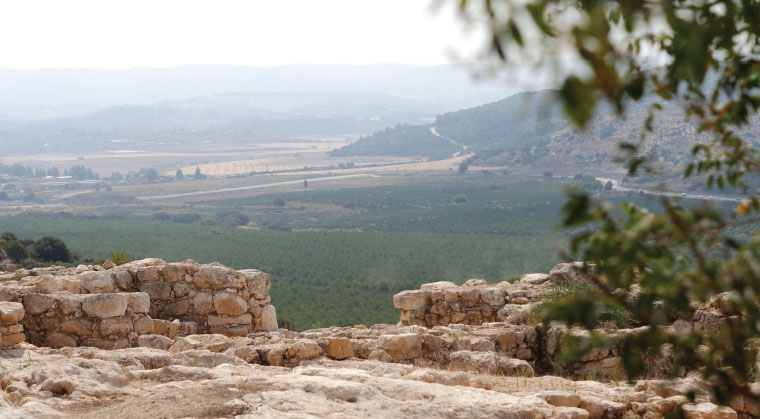
he Valley of Elah is peaceful on this sunlit Israeli morning. In the distance a few trucks wend their way up the highway that has been transporting travelers and goods and sometimes armies from the southern coast to the Judean hill country since ancient times. But the surrounding hills which carry names with biblical echoes — Azeka Socho Yarmut and Adulam — are deserted and silent.
It therefore takes more than a little imagination to visualize how the scene must have looked some 3000 years ago when the Philistine army gathered at Socho and Goliath their prized warrior taunted the Israelite troops huddled on a nearby hilltop daring them to send a man to do battle. The one-on-one armed conflict that Goliath proposed was winner takes all: If the Jewish warrior won the Philistines would become Shaul’s servants. But if Goliath won the Jews would become the servants of the Philistines. Was it any wonder that the Jewish soldiers trembled at the thought of confronting the seemingly invincible giant?
As we know from the account found in Shmuel I chapter 17 a young shepherd named David rose to the challenge. Selecting five stones from the Elah Valley and armed with just a slingshot he felled Goliath and with Hashem’s help saved the day.
Create a free account to keep reading.