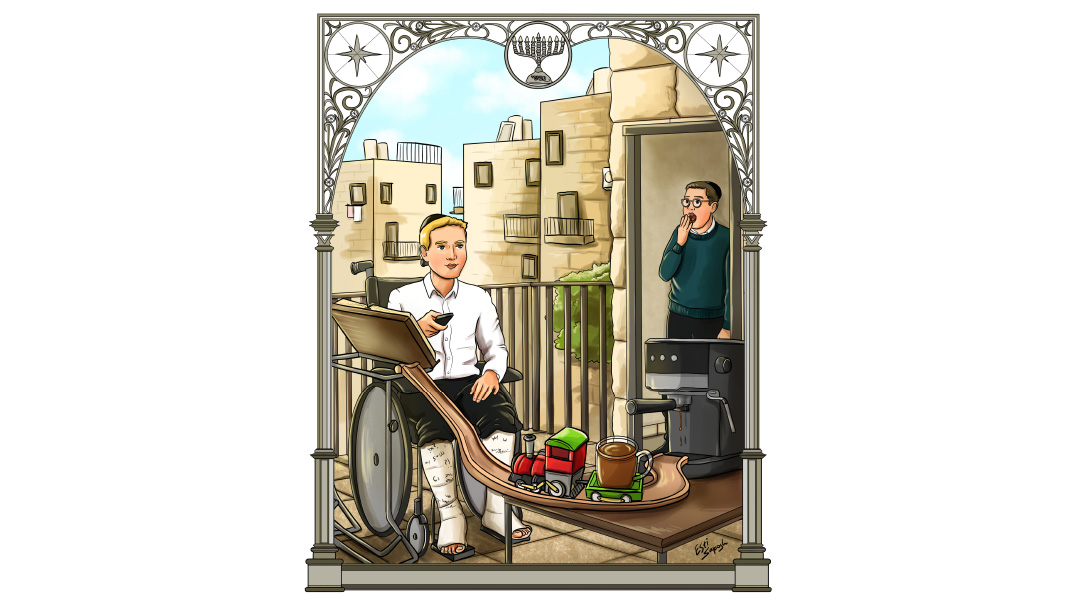
Meah Shearim mega-host Yanky Shisha aims to eliminate the hunger and shame of his childhood poverty

It’s not only that he’s the patron and supporter of hundreds of poor families in these parts, or that he’s the backbone of widows and orphans, or that he hosts over a hundred bochurim every week at his Shabbos table, or that he pulled himself out of the poverty of these ancient, hallowed Yerushalmi alleyways to create both a national chesed empire and a formidable private real estate operation. These are the people he loves, the community he calls his own, and from the time he was a little boy, he had a dream to help them live in dignity. Today, the 38-year-old dreamer has seen his vision come true.
Like his parents and grandparents before him, Yaakov Eliezer Shisha was born in Meah Shearim to a family of Toldos Aharon chassidim. He’s the oldest of 13 children, “born,” he says, “into one of the poorest Jewish areas in the world, with very little chance for material success in life.” His father worked hard but barely made ends meet, and whatever he earned went to rent and utilities. Not much was left to feed his large family.
Maybe Yanky was overly sensitive, maybe he had a certain pride that others didn’t, even though almost all the kids in his neighborhood were in the same boat. But he still remembers the humiliation of standing in line, waiting for approval for Shabbos or Yom Tov packages or other kinds of support, and then going to a distribution point and filling up a shopping cart, often with factory seconds or packages that were bent or about to expire.
That’s not to say he didn’t grow up in a warm, loving, stable family. “My parents did everything they could for us, but they couldn’t do too much,” Shisha says, categorically dismissing the idea that today, there isn’t real poverty, and no one goes hungry anymore. “It’s not just Meah Shearim, and not just 30 years ago. It’s all over the country, until today. The salaries of many people, even those who are willing to work hard, just don’t cover the cost of living today. And I’m not even talking about widows and others who’ve lost their source of parnassah. You can’t not pay the electricity, they’ll shut you off, and you can’t not pay the rent, because they’ll throw you out. There are many families who simply have no money for food.
Create a free account to keep reading.