High on isolated Indian cliffs, the Bnei Menashe are almost living Jewish
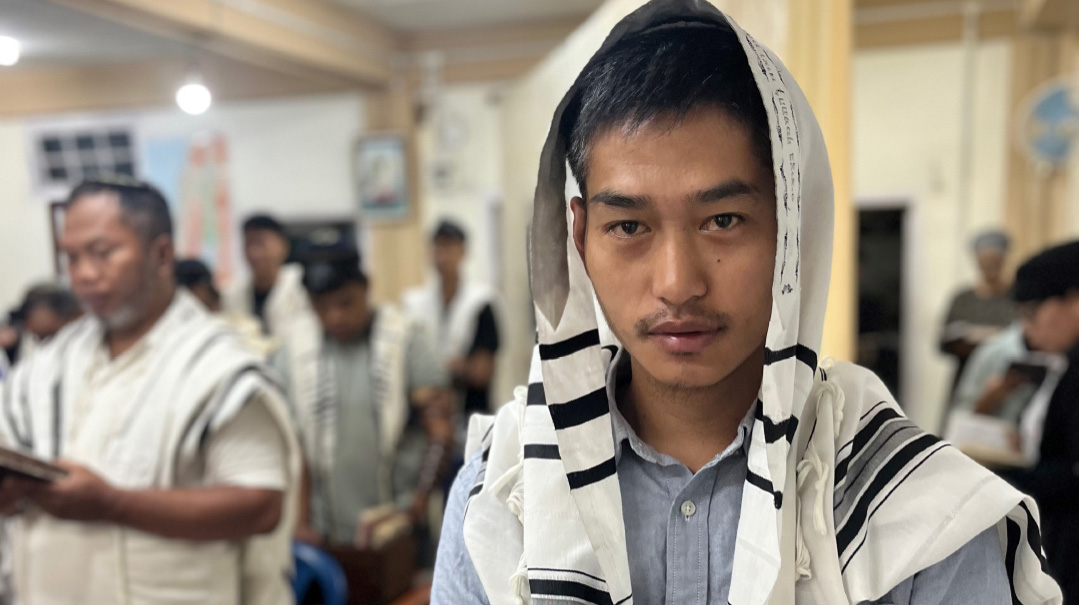
It wasn’t the first time we’d traveled to the backwaters of northeast India to examine the ancient communities claiming a connection to Lost Tribes of Israel. A few years back, Ari Zivotofsky and I paid a visit to several of the far-flung Bnei Menashe communities in the state of Manipur — with their tzitzis and yarmulke-clad young village men — near the Indian-Burmese border.
But when our friend Rabbi Eliyahu Birnbaum of Israel’s chief rabbinate asked me to travel with him to India to do a mitzvah, I couldn’t turn down the opportunity: I was to act as the shaliach to deliver a get to a Jewish woman of the Bnei Menashe tribe who was languishing in an Indian prison. Never one to put off doing a mitzvah (especially if there’s an adventure involved), it was also a chance to revisit these unusual communities — this time in the adjacent state of Mizoram — and see how they’ve been faring, especially as the region has been racked by civil war.
While many readers have surely come across halachic Bnei Menashe converts in Israel — the men in yarmulkes and the women in headscarves — seeing their ancient communities on the ground — before aliyah and conversion by the Israeli Chief Rabbinate — is always special and edifying.
I had planned to combine the trip with Simchas Torah, to observe how the Bnei Menashe observe the holiday. Not having been visited by a religious teacher for almost five years, the community was ecstatic when our little group arrived, especially after learning that I had brought milah equipment with me when I heard about a one-month-old baby who needed a bris. Welcome to the Bnei Menashe, the “almost” Jews of Mizoram.
Create a free account to keep reading.