There’s a world of everything for everyone out there, but nothing for you. So, when marketing agencies create ads that talk to you— that speak your language— you’re a lot more likely to open your wallet
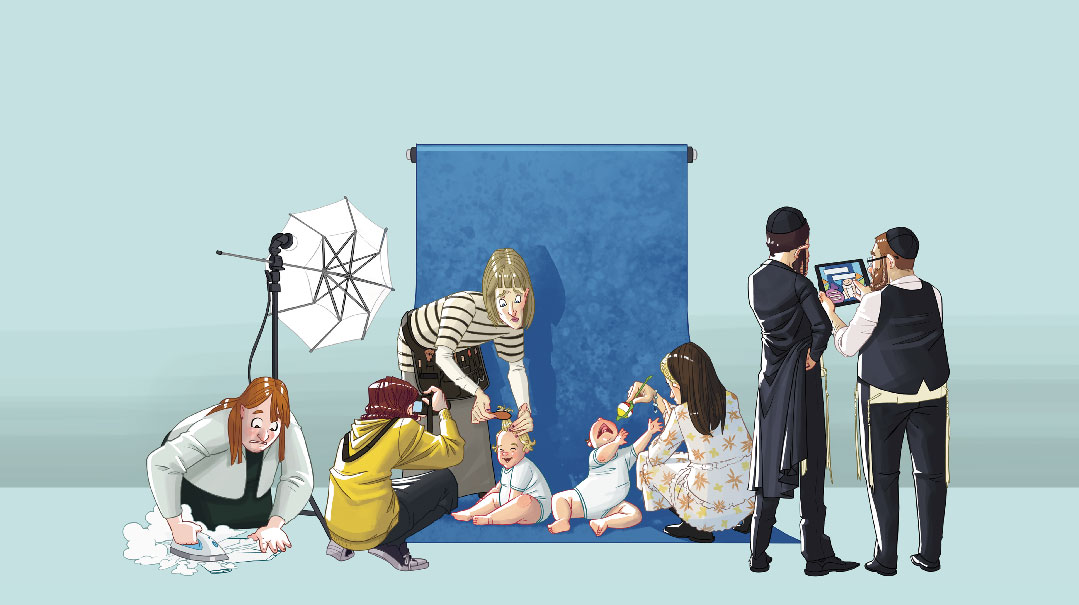
Illustrations: Dov Ber Cohen
With frum advertisers becoming ever-more sophisticated when it comes to branding, the newest technique in the industry is the “frum photoshoot.” Photoshopped peyos aside, which heimishe yungerman would agree to be a model for a chassidish men’s clothing line, and what kind of mother is thrilled to push her adorable toddler in front of a camera for a onesies ad?
Raise your hand if you remember the ads with a fancy guy in a suit with a badly photoshopped yarmulke perched on his head. Yeah, those ads are long gone. My friend, a graphic artist, used to gripe about them all the time, but she hasn’t done that in a while. Frum marketing has upped its game in the past years, going from gangly tween to cool teenager in an extreme makeover kind of way. The pictures you see of the gorgeous chassidish kid with gekrazeled peyos hawking European shoes, or chocolate — he’s real. But you knew that intuitively, because you’ve never seen fake peyos, or photshopped beard or yarmulke that actually passed muster to anyone frum. Today the frum world has marketing agencies, with creative directors and photographers and models — yes, models — too.
Some will decry this evolution, pining for the simpler days when businesses and nonprofits didn’t need sophisticated branding to attract customers. But the move toward branding has brought real rewards. There’s psychology behind it, and it works, bringing in more business for food and clothing and furniture companies, and more funding for your favorite chesed organization too.
A fixture in the new marketing playing field is what I’ve feebly dubbed the frum photoshoot. It’s still relatively new, only single-digit years old, but fascinating. Shlome Steinmetz, the CEO and founder of the frum marketing agency PivotGroup, tells me the shift started around eight years ago. He remembers working on an ad for the Toshea (Eitzah) nonprofit helpline when they came up with the idea of a custom photoshoot. Their biggest hurdle was finding models. No one would agree to be photographed commercially. In the end they found kids in Israel to pose for American ads, but the organization had to sign all kinds of confidentiality statements, guaranteeing that the photos wouldn’t be used elsewhere and the kids’ names wouldn’t be leaked. That ad campaign was a huge success, and suddenly real frum people in ads was not a crazy innovation anymore but an idea whose time had come.
Create a free account to keep reading.