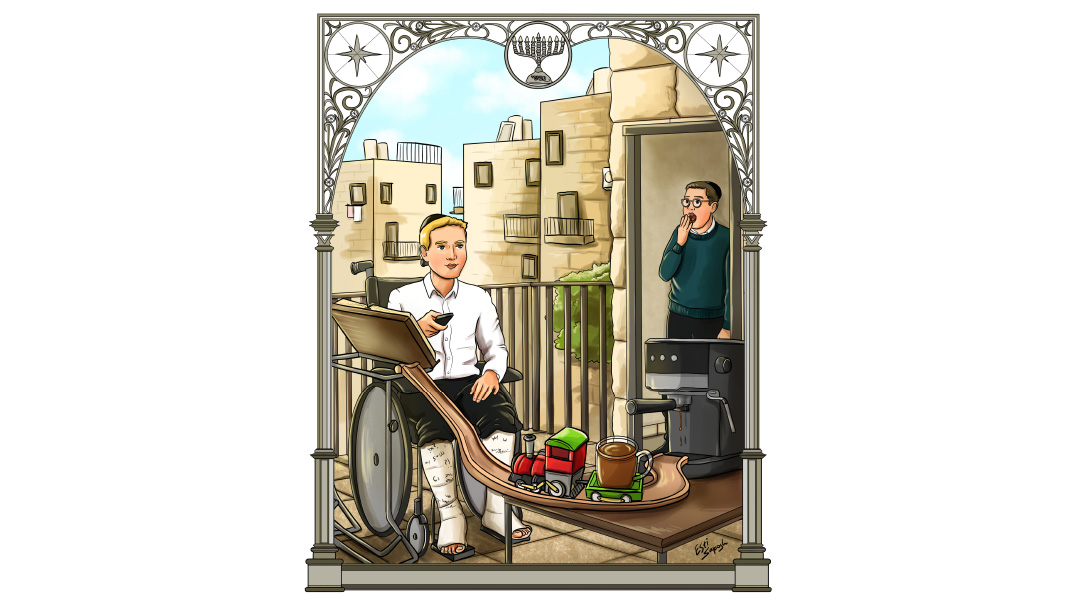
As a general rule, the mitzvah of honoring one’s parents doesn’t require children to pay any money toward the performance of the mitzvah


Prepared for print by Faigy Peritzman
It’s a Torah obligation for a child to stand up to his or her full height as soon as the child spots a parent entering a room, even if the parent is still quite a distance away. The obligation to stand remains in effect until the parent is seated or is no longer visible. Practically speaking, this mitzvah isn’t widely observed, since it’s generally assumed that parents forgo this honor, which exempts the child from standing to their full height, but still requires them to rise up a bit when a parent enters the room. In addition, while most parents forgo this honor, there are some parents who don’t, so it’s important that the parents discuss this matter with their children to let them know their expectations on this matter.
You have a right to accept upon yourself legitimate halachic stringencies and upgrades even if your mother objects to them. But as long as you’re living in her house, you have no right to tell her how to run her kitchen, where she should go shopping, or what she should pay for. You’ll have to take care of your halachic choices on your own.
You’re not at all obligated to pay for the traveling or wedding expenses. As a general rule, the mitzvah of honoring one’s parents doesn’t require children to pay any money toward the performance of the mitzvah. On the other hand, if one’s parents are “poor” and are halachically eligible to accept tzedakah, then children have the obligation to support their parents, and if they can’t afford to do so, then they’re obligated to dedicate their maaser funds toward their parents’ needs.
While it’s true that a husband has the halachic right to restrict his wife from visiting her parents on a regular basis if he feels that those visits contradict his own needs, he doesn’t have the halachic right to completely ban his wife from visiting her parents infrequently — at least once or twice a month and during every Yom Tov. It’s also true that a husband in a healthy marriage will do whatever he can to allow his wife to take care of her parents, even if it somehow affects his daily routine or comfort level.
Create a free account to keep reading.