Though RavBinyomin Beinush may not be as well known as his father, grandfather, or son-in-law Rav Nosson Tzvi, perhaps that is exactly how he wanted it to be
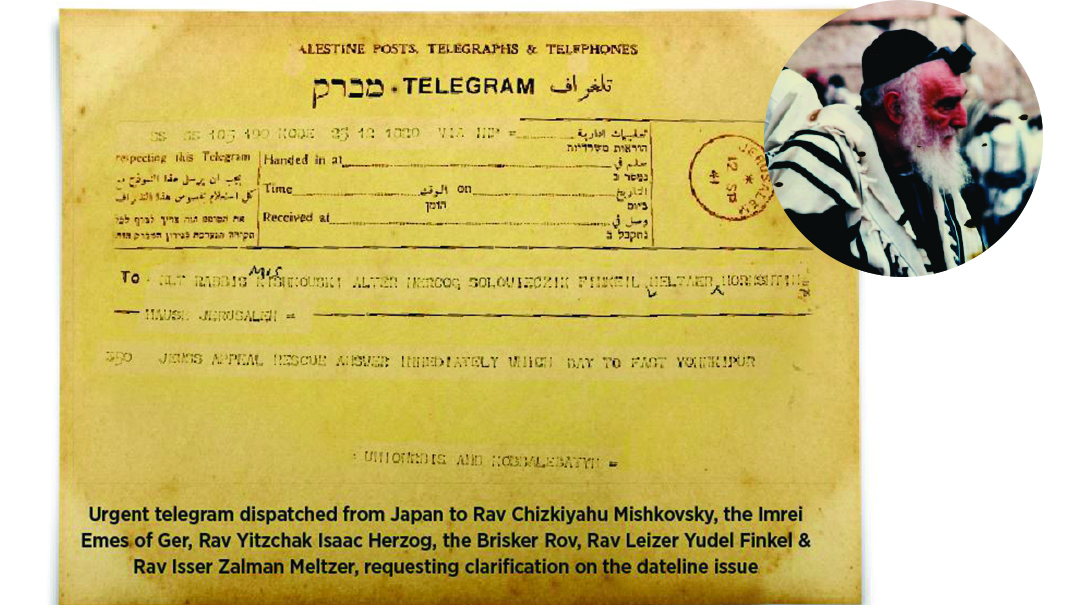
Born and raised in Mir, Poland, future rosh yeshivah Rav Binyomin Beinush Finkel arrived in Eretz Yisrael in the spring of 1941 having escaped from war-torn Europe. At that time the Mirrer Yeshivah talmidim were refugees in Kobe, Japan, and a question arose as to the placement of the halachic international dateline. This would determine which day the refugees observed Shabbos.
The Rosh Yeshivah, Rav Leizer Yudel Finkel, decided to refer the question to the Chazon Ish, then not quite as well known. He tapped his son Rav Beinush to present the complicated query to him. As the two got into an animated discussion of the question, the senior sage was impressed with the young man’s Talmudic prowess. The Chazon Ish went on to recommend Rav Beinush for his niece Esther Greineman, whose father, Rav Shmuel Greineman, coincidentally was employed by the Mir during the 1920s as part of his work on behalf of the Vaad Hayeshivos.
For the next quarter century, Rav Beinush resided in Bnei Brak, commuting to Yerushalayim to assist his father with the running of the yeshivah. Refusing to accept even minimal compensation from the yeshivah’s coffers, he rented out his Bnei Brak apartment and lived with his family in an ice factory watchman’s hut at the city’s edge. With his father’s passing in 1965, he moved permanently to Yerushalayim to take the helm, overseeing the yeshivah’s spectacular growth under his watch.
Like his grandfather the Alter of Slabodka — whose ways were hidden — his greatness was manifest in every interaction. Though Rav Beinush may not be as well known as his father, grandfather, or son-in-law Rav Nosson Tzvi, perhaps that is exactly how he wanted it to be.
Create a free account to keep reading.