After the war a chain of events commenced that would eventually restore the tzaddik’s kever as a place of prayer
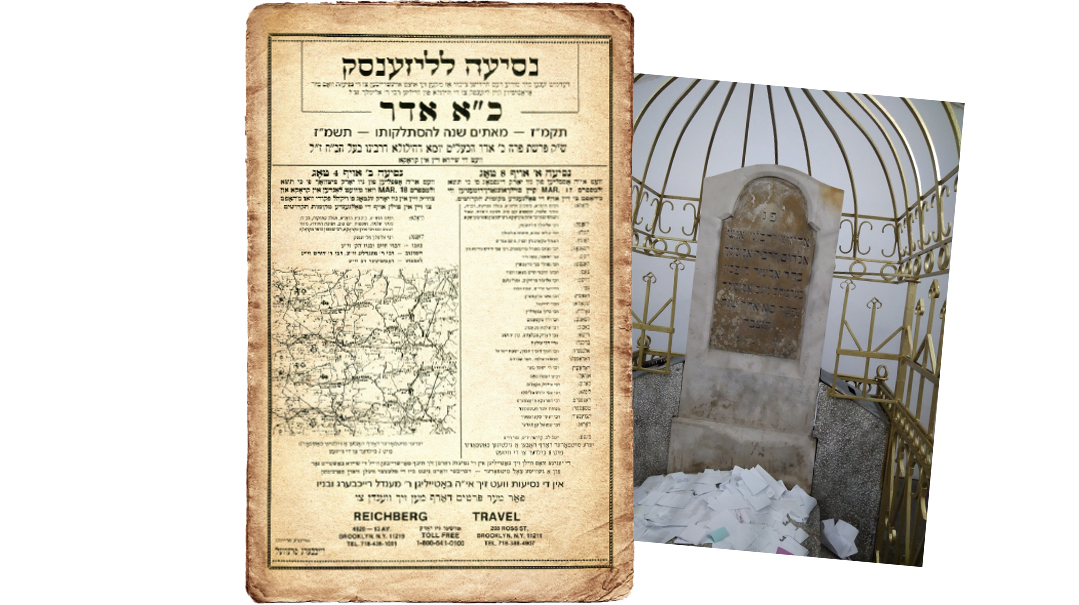
After the war a chain of events commenced that would eventually restore the tzaddik’s kever as a place of prayer. Boruch Safier — a Lizhensk native who returned in 1959 from the Soviet gulag — discovered the original matzeivah in the local marketplace. In the early 1960s, another initiative paid for the rebuilding of the ohel. Occasionally, uprooted tombstones that had been used to pave the local roads would be returned to their place in the Jewish cemetery.
By the 1970s Jewish visitors began to return. Though Poland was a Communist country, this didn’t deter pioneer Bobover chassid and Holocaust survivor Mendel Reichberg from bringing groups to daven in Lizhensk in honor of the yahrtzeit. Organizers planned weeklong trips covering kivrei tzaddikim throughout the entire region, with a memorable Shabbos spent in Krakow with that storied city’s tiny remnant of a Jewish community. And it was not limited to davening, as Reb Mendel would expend great efforts and resources to restore the ohelim and kevarim of great tzaddikim and Jewish cemeteries across Poland.
By 1987, in Communism’s last throes, a larger trip commemorated the Noam Elimelech’s bicentennial yahrtzeit. These early trips reestablished the Jewish presence at these kivrei tzaddikim, and adumbrated today’s burgeoning industry of yahrtzeit and year-round pilgrimages.
Newspaper coverage of the 1936 yahrtzeit gathering describes the throngs who arrived for the Shabbos prior, and the great seudos and l’chayims that were enjoyed by thousands who arrived from Poland and abroad. An unusually large crowd was noted, due to the recent rise in economic woes, anti-Semitism, and other calamities, creating a sense of urgency to daven for yeshuos at the tzaddik’s grave on his yahrtzeit. Many of Poland’s greatest rebbes were accompanied by hundreds of their chassidim, including the Radomsk, Ostrovtza, and Komarna Rebbes.
Create a free account to keep reading.