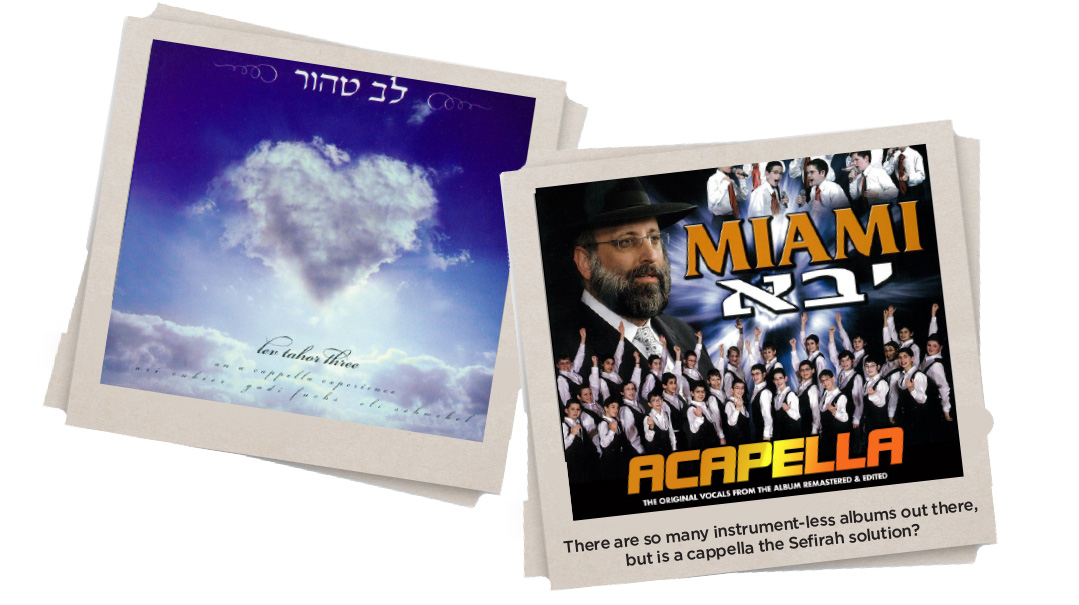
There are so many instrument-less albums out there, but is a cappella the Sefirah solution?
Now, I’m not a rabbi and I’m surely not an authority on the halachos about what’s permitted and what should be avoided regarding music during Sefirah. However, being in the music industry, I’ve been privy to a host of views and myriad questions that have come up.
Around 25 years ago, the idea of a cappella recordings started as a leniency for times on the Jewish calendar when music is prohibited. (In Italian, a cappella literally means “in chapel,” or choir style. In Gur, for example, the choir accompanying the chazzan is called the “cappella.”) The first of these albums was called The Sefirah Album, produced by Yochi Briskman. Yochi felt that all the songs should be slow, moving, and soul-stirring songs, in keeping with the Sefirah mood.
That album was followed by Avrumi Flam’s The Three Weeks CD, and then a voice-only version of the Lev Tahor albums produced by Eli Schwebel, Gabi Fuchs, and Ari Cukier. Since those days, modern music has evolved to meet the needs and expectations of its audience. Albums like Yerachmiel Begun’s Around the Campfire, Ari Goldwag’s 15 A Cappella Soul CDs, albums by the Maccabeats (a.k.a. Six13), Simcha Leiner, the Chevra, Benny Friedman’s Whispers of the Heart albums, and Doni Gross’s Kumzitz in the Rain series are part of a growing list.
A new development in this type of singing is that performers create authentic-sounding bass and drum beats with their mouths, called “beatboxing.” For poskim who are strict about this type of music, beatboxing is another complication.
Create a free account to keep reading.