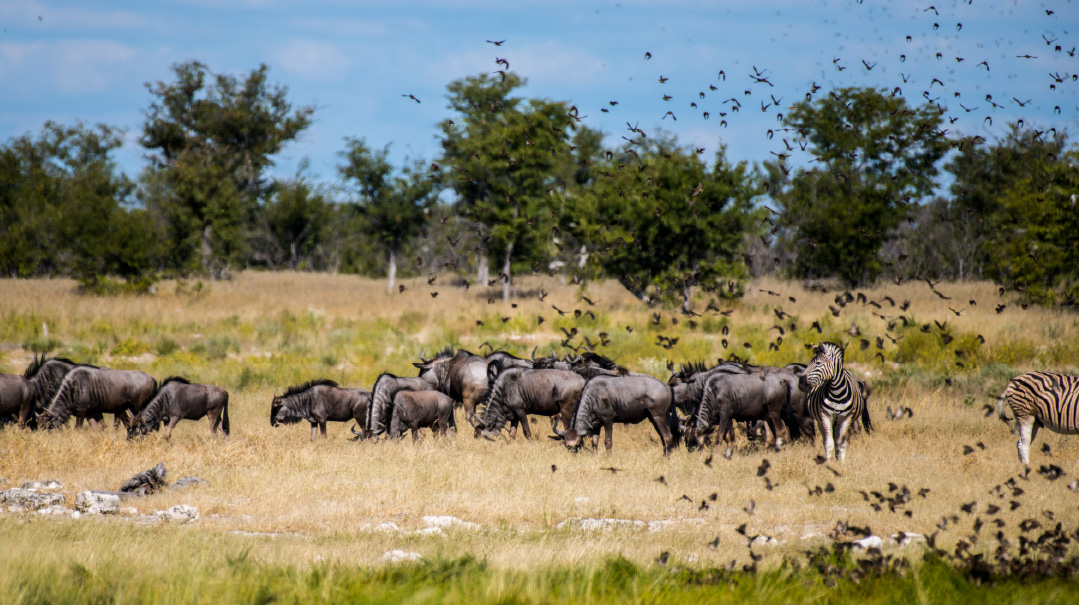
Zebras, ostriches, and Jewish skeletons in a trek through Namibia
As told to Eliyahu Ackerman by Meir Alfasi
Photos: Meir Alfasi
In the cemetery at Swakopmund, a resort village on the western coast of Namibia, I’m looking for a Jewish tombstone with a kosher l’Pesach label.
It’s not a joke. But first, a little background on Swakopmund, which was founded in 1892 as the main harbor for the Imperial German colony in Namibia — formerly known as South West Africa. In this beachfront town, with picturesque homes that seem to have been transplanted from the Bavarian mountains and set down in the heart of southern Africa, you won’t find a lot of Europeans today, but many of the store marquis are still in German. Before Namibian independence from South Africa in 1990, many street names were in their original German, but that changed after the revolution, when, for example, the main street’s name was changed from Kaiser Wilhelm Strasse to Sam Nujoma Avenue, after the then-president who renamed the street after himself.
Notwithstanding Swakopmund’s European roots and multicultural history, I wanted to discover if there was a kernel of truth to an anecdote I’d heard about a Jewish family from Vilna who, at the beginning of the 20th century, ended up in a remote corner of Africa. The family did well in business, but due to a lack of Yiddishkeit in the region, the children grew up totally ignorant of their heritage. Before the family patriarch passed away, he requested that the family place Hebrew letters on his headstone, which he knew his own parents and grandparents had done. But despite their desire to fulfill their father’s will, his children were stumped: They had no idea what a Hebrew letter looked like. According the version of the story I’d heard, only the youngest son refused to give up the quest. He turned the house over from basement to attic until he found a Jewish text on a box of matzos, which he carefully copied onto the headstone: Kosher l’Pesach.
Create a free account to keep reading.