The recovery of forgotten mesorah and lost minhagim that once flourished in the pre-modern world of safrus
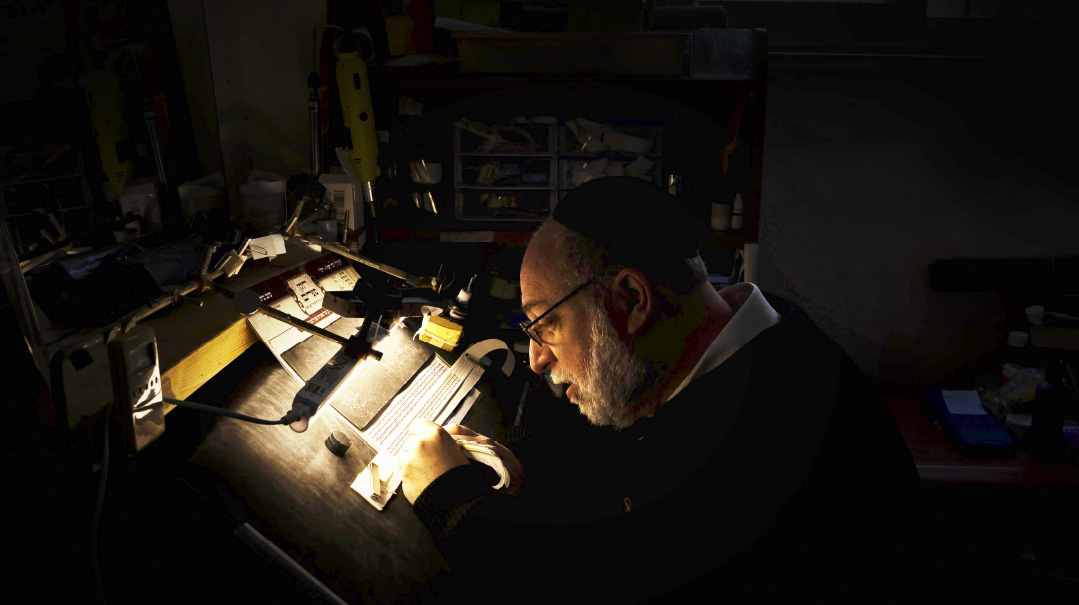
IN a small room adjoining his home in Ramat Beit Shemesh, ink pools in a tiny dish and the sound of a feather quill scratching parchment faintly echoes, as Rabbi Avraham Strauss puts the final letters on the last folio of a nearly complete sefer Torah. But this is no ordinary Torah scroll — it’s a hands-on, living mesorah of how sacred texts were once written.
Rabbi Strauss is at the forefront of a small cadre of sofrim whose mission is to bring back ancient writing traditions that might have otherwise been relegated to the dustbin of history. His is a quiet revolution: the recovery of forgotten mesorah and lost scripts that once flourished in the premodern Jewish world. It’s a complex tapestry of mesorah, halachic debate, historical shifts, and practical questions surrounding ksav, sofrim, and our relationship with earlier generations.
The sefer Torah — the 12th one he’s written, this one a self-commission in fulfillment of the mitzvah of writing a personal Torah scroll — is a testimony to his research. It’s written primarily according to the custom of the Rema, the great 16th-century Ashkenazi posek, with certain stylistic nuances that today have virtually disappeared.
Still, there is no copy of the Rema’s sefer Torah in existence today, so how does he know what was different than the modern standard?
Create a free account to keep reading.