Open Hearts,January 1991. Saddam Hussein has invaded Kuwait. America prepares for Operation Desert Storm to liberate Kuwait and defend its oil supply, building a coalition of countries around the world — including Arab regimes — against the “Butcher of Bagdad.” But Saddam has a secret method for cracking the coalition against him: he bombards Israel with Scud missiles. Twenty years later, memories of the sirens, the panic, the run for the sealed rooms — and the gratitude for salvation against the odds.
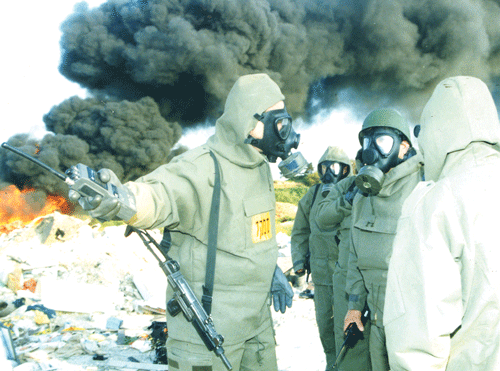
Saddam Hussein’s invasion of Kuwait on August 2 1990 radically transforms the life of those of us living in Eretz Yisrael. Despite months of his threats to incinerate Israel we have been lulled into a false sense of security by the constant bluster of the Israeli government that Saddam surely knows that any attack on Israel will elicit a response of such magnitude that no sane leader could contemplate it. The blitzkrieg into Kuwait however reveals a high-stakes gambler who just might be willing to call that bluff.
For the next five months it seems that no conversation — even among those with no thought of leaving — is complete without the questions “Are you staying?” and “Do you think there will be a war?” as if to make sure that they are not somehow acting irresponsibly.
Another aspect of every conversation is an almost ritualistic comparison of notes about hysterical calls from parents in the States pleading with their children to “come home.” The calls began almost immediately with the invasion itself and reach a crescendo as the UN deadline for Iraq’s withdrawal from Kuwait draws near. These calls do more to frighten people here than anything we are hearing on the news.
A baal teshuvah friend notes wryly that his parents who did not exactly grow up on emunah and bitachon have not once suggested the possibility of returning home despite having four children and ten grandchildren here. I point out to him that religious parents imagine that their children can simply return to their respective birthplaces and lead the same lives that they did here; his parents are under no such illusion. Second many religious parents either experienced themselves or come from families that experienced the horrors of the Holocaust and are bound to be hypersensitive to threats of danger.
Create a free account to keep reading.