This was not simply a submarine. This was an underwater aircraft carrier!
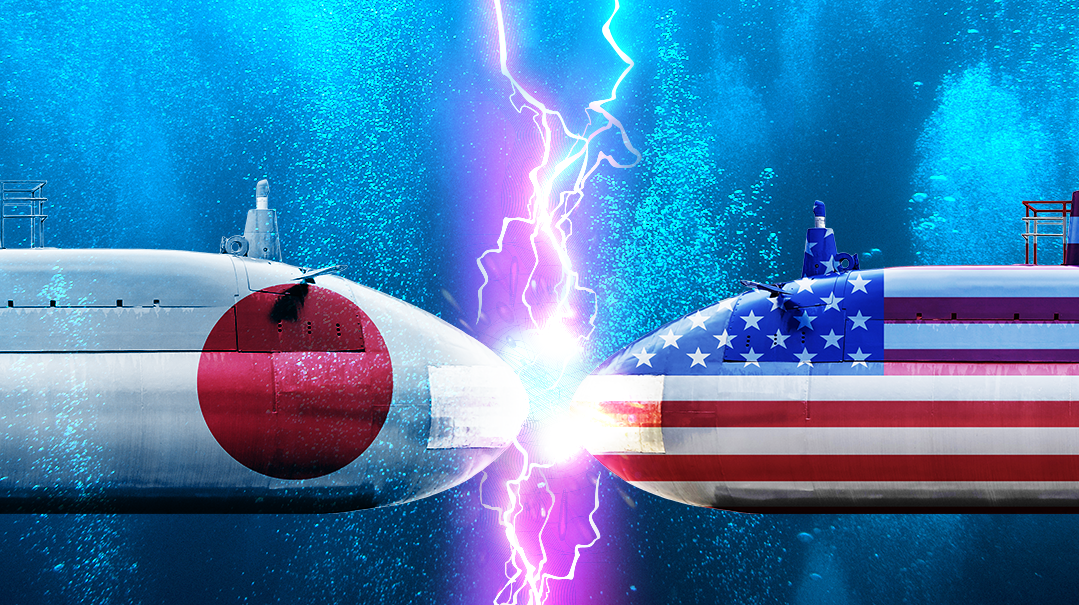
USS Segundo, Sea of Okhotsk, August 28, 1945
The USS Segundo was an American submarine that was on her final war patrol in the Sea of Okhotsk, sailing south toward Tokyo Bay. Just three weeks earlier, on August 6 and 9 respectively, America had dropped two atom bombs over the Japanese cities of Hiroshima and Nagasaki, forcing Emperor Hirohito to finally admit defeat. On August 15, the emperor had announced Japan’s surrender. But Japanese naval vessels were still out there, and the Segundo’s mission was to round them up and bring them back home.
Just before midnight, an unidentified object appeared on the Segundo’s sonar. The sub’s captain, Lieutenant S. Johnson, and his crew, quickly realized that this was a Japanese submarine. What they didn’t realize was that this was the largest submarine in the world, the likes of which they had never seen before. The Americans had discovered Japan’s secret weapon.
After a four-hour chase, the Americans managed to convince the Japanese sub to rise to the surface. Nothing prepared Captain Johnson for the unbelievable sight that met his eyes when he went up on deck. Less than 500 meters (1,640 feet) away, a monstrous submarine broke through the surface; he had never seen anything like it in his life. The I-401 submarine was twice the size of the Segundo, and had more than double the number of crewmembers.
A figure appeared on the deck of the enemy sub. It was head navigator Officer Muneo Bando, who had come to negotiate the terms of surrender. In his broken English, he told Johnson that things wouldn’t be easy for the American crew. The commander of the Japanese submarine, Captain Ariizumi, would rather die than admit defeat. It turned out that Ariizumi had been sleeping when the Japanese emperor had broadcast his surrender announcement to the nation, and he refused to come to terms with the possibility of surrender. There were also a number of Japanese crew members who refused to reconcile with the idea. They threatened to take control of the submarine and to launch raids on the Americans, or to carry out mass hara-kiri (suicide).
Create a free account to keep reading.