I’d like to hope that being sensitive to people different from themselves is in my children’s genes
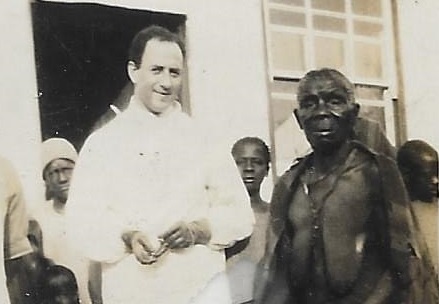
In the overwhelmingly wonder-bread world we inhabit, in which my children hardly see or interact with people of different skin color, this picture shows them a completely different reality. They have learned that the dark-skinned people in the picture were not simply patients of their great-grandfather, but rather a people whom he was devoted to serving. He cared about them family by family, individual by individual, during arguably the most extreme example of racial tension in the modern era: South African apartheid.
Dr. Henry Lazarus was an unsung hero who dedicated himself to healing the black population of South Africa at the height of apartheid. While he worked tirelessly after the war to help Jewish refugees, his own people, he was beloved by thousands of tribal Africans who traveled hundreds of miles from their villages to receive his treatment. Dr. Lazarus spoke four African languages fluently and was made an honorary member of the Royal Society of Witchdoctors (he was not a practicing member), upon which he was presented with a set of witch doctor bones and calabashes. If his patients did not have money, they paid in bananas or live chickens. He was affectionately known as Dr. Jabula, which means Dr. Happiness in Zulu.
I’d like to hope that being sensitive to people different from themselves is in my children’s genes, despite their limited exposure. I want them to always remember what their great-grandfather stood for as they try to make sense of the world around them, especially during these tumultuous times.
Historians and anthropologists can compare and contrast the experiences and dynamics of blacks in South Africa to those of blacks in the United States. But I’m interested less in the comparisons, and more in how my grandfather looked at people from such a radically different culture, who represented “the other” in a time of such significant social, political and economic divide, and made them his own. I am interested in how this figure of my past can inform the attitudes of my children’s present.
Create a free account to keep reading.