“In Succos you should sit for seven days…” (Vayikra 23:42)
On Succos, we have two mitzvos: sitting in the succah, and shaking the daled minim. These two mitzvos represent the two sides of man. Shaking the Four Minim represents how man is always in movement. We are full of various wants and desires, and all of these desires are the driving force that move us. The mitzvah of sitting in the succah represents a totally different side of us. In a succah, we don’t move, we sit there. (Harav Itamar Schwartz, Bilvavi)
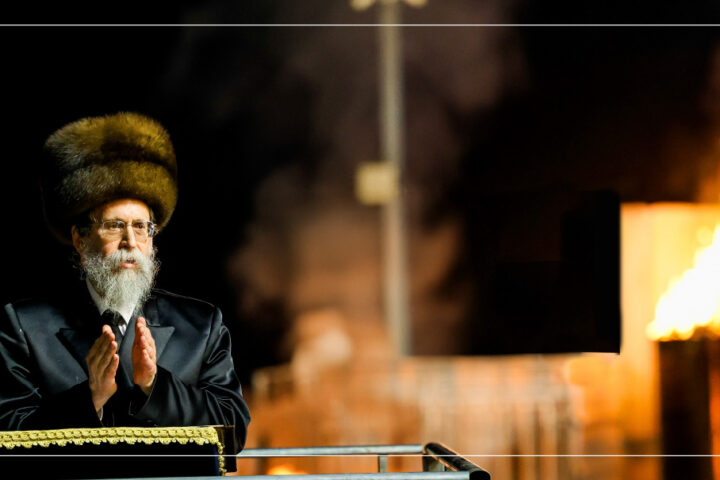
Some people are the movers and shakers of society. Others are the solid pillars of the community. Rare is the person who manages both, but Rabbi Lewis* is one of those.
Rabbi of a large kehillah in Eretz Yisrael, he’s constantly busy with the needs of his community, giving shiurim, advising people, paskening, doing chesed — a leader in all aspects, despite his humble demeanor. Few of his congregants truly know the depth of his tzidkus, but all know how much they rely upon and revere him as their rav.
Hashem is mainly called by two names. The first is “ado–noy;” He is our adon, our Master, Whom we serve through mitzvos. The more elevated Name of Hashem is the four-letter name of “havayah;” this refers to the simple recognition of Hashem’s existence.
The two names reflect the two sides of our life’s mission. On one hand, we “move” constantly, doing all the mitzvos, serving “ad–noy, our Master.” But we have a deeper, inner servitude as well — when we recognize Hashem’s existence and integrate our own existence with His. This is a deeper part of our life, utilizing the name “havayah.”
This past summer, Rabbi Lewis uncharacteristically took a month’s leave of absence, to travel abroad and visit his elderly mother. He hoped to bring her to Eretz Yisrael, and despite his busy routine, he devoted a sizable stretch of time to work on this.
Yet, despite his best efforts, he returned alone: He was unable to finalize her aliyah.