The Bedouin land grab at the heart of Naftali Bennett's coalition
On the surface, the swearing-in ceremony in the Knesset last Sunday for Mansour Abbas, leader of the Arab Ra’am party, was just one of many that took place as Naftali Bennett’s government assumed power. A smiling MK stepped up to the podium, was handed the text of his declaration of allegiance, recited his own and his parents’ names, and vowed “to uphold the State of Israel and its laws.”
But in reality, the ceremony was nothing less than a political earthquake.
The most obvious result was that an Arab party had joined an Israeli governing coalition the first time. But behind that headline lay a more consequential impact: the price tag. For the “change coalition,” convincing Ra’am, the southern branch of the Islamic Movement in Israel, to recognize the Jewish state, join its government, and vow to uphold its laws, came at a steep cost. The NIS 50 billion allocated to the Arab sector by the coalition deal — equivalent to half a century’s worth of funding for the chareidi sector — shocked many Israelis.
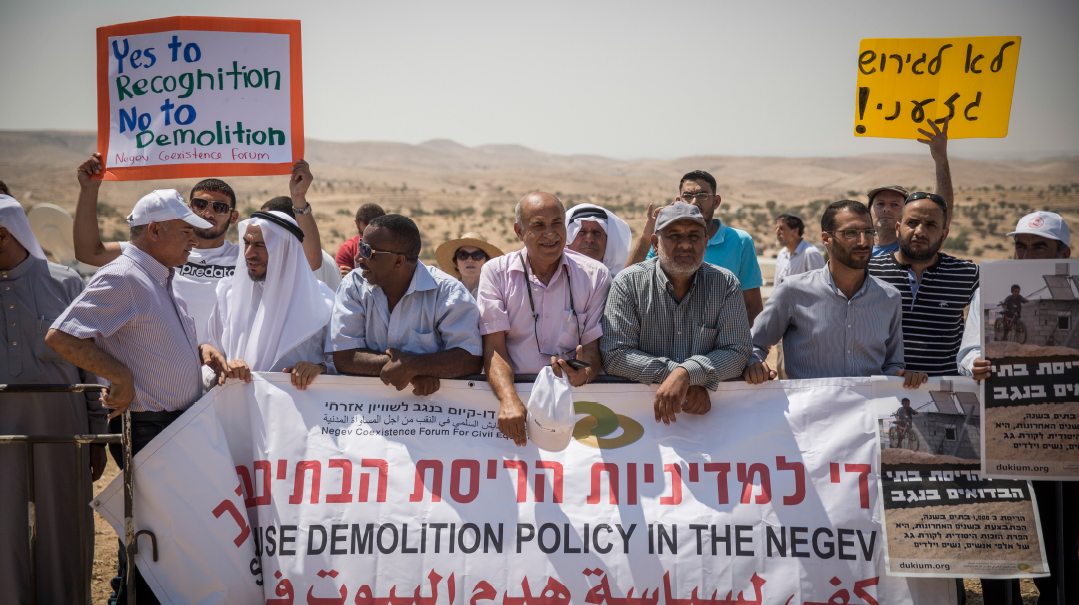
But there is an additional price to be paid. To grasp the real total that Naftali Bennett paid for Ra’am’s political support, you need to take a trip south to the Negev Desert, where vast areas have been swallowed in recent years by illegal Bedouin building. Aside from chairmanship of the Knesset’s Interior Committee and of the Arab Affairs Committee, Ra’am leader Mansour Abbas secured a clause stipulating the legalization of three Bedouin villages in the Negev as well as a review of the status of 11 others.
Create a free account to keep reading.