LONG READS Issue 1101 · February 25, 2026

Stroke of Inspiration 

Rabbi Paysach Krohn’s rebound after illness is his most motivating story of all
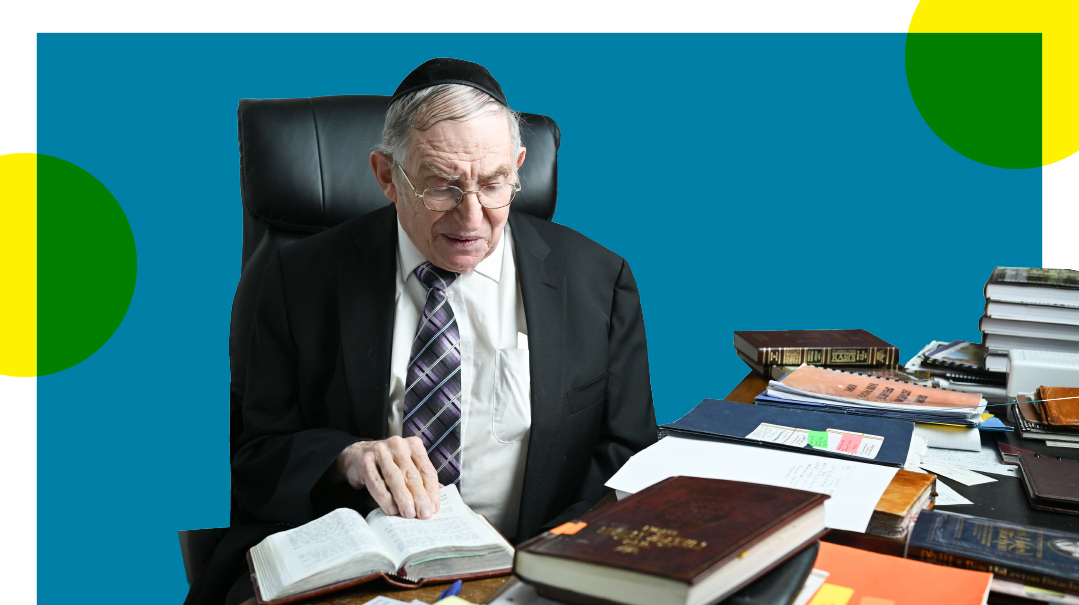
Stroke of Inspiration 
Photos: Naftoli Goldgrab
Rabbi Paysach Krohn – world-renowned speaker, mohel, and author of the bestselling Maggid series — has spent decades telling tales that uplift and inspire.  But rebounding from a stroke he suffered just over a year ago, and drawing on his challenges to provide chizuk to others, might just be his most important story of all

IT was during those golden moments when the hectic energy of Friday afternoon suddenly dissolves into the palpable kedushah of Shabbos that the unthinkable happened.

Hundreds of men at Agudath Israel of America’s 2024 convention were making their way through Connecticut’s Armon Stamford Hotel toward the shul on the afternoon of December 6, 2024, ready to usher in Shabbos Hamalkah with a heartfelt davening. Renowned lecturer, author, and mohel Rabbi Paysach Krohn was one of them, and he was looking forward to addressing the oilem at his highly anticipated annual “Friday Night with the Maggid” post-seudah address that consistently drew hundreds of listeners. The convention theme of “Believers – B’emunaso yichyeh” was one that resonated strongly with Rabbi Krohn, and as he made his way to the shul, the notes for his 10:15 p.m. session were neatly tucked away in a two-pocket folder he was carrying in his hand.

Suddenly, without warning, alarmed voices rang out, shattering the tranquility of the moment. Rabbi Krohn distinctly remembers hearing someone shouting, “Catch him, he’s falling!” Oddly enough, Rabbi Krohn knew that he was the “him” being spoken about. Stranger still, he was quite sure that the Hatzalah member sounding the alarm was wrong.

“I’m not falling,” Rabbi Krohn called out, but as the words came out of his mouth, he knew that something was amiss. His slurred speech made it painfully clear, even to him, that he was having a stroke.

It was a chaotic moment where everything, somehow, clicked into place. Son-in-law Chananya Kramer, who was walking directly behind Rabbi Krohn, managed to catch him as he fell, with two nearby Hatzalah of Waterbury volunteers rushing over to offer aid. And in the first link of the very long chain of Hashgachah pratis moments that the Krohn family was about to experience, the Agudah Convention was taking place less than a mile and a half away from Stamford Hospital.

As Reb Chananya ran to get his mother-in-law, who was lighting Shabbos candles a short distance away, his mind raced furiously as he tried to decide what he was going to tell her. In a split-second decision, he chose to say just that Rabbi Krohn had fallen, wanting to keep his mother-in-law’s worries at a more manageable level until she could see the situation for herself.

“I saw on Chananya’s face that something was wrong,” recalls Mrs. Miriam Krohn, Rabbi Krohn’s wife, who is limudei kodesh principal at Shevach High School in Queens. “However, they had things so under control that I felt that confidence, and I thought to myself, we can handle this. We’re going to manage this.”

With time of the essence when it comes to treating stroke patients, Hatzalah called ahead to inform Stamford Hospital that they would be there in a matter of moments. The hospital had a team waiting outside to meet the ambulance, hoping that the timely medical care would limit the potential for damage.

At the hospital, doctors assured Mrs. Krohn that the fact that her husband hadn’t lost his power of speech suggested that the stroke he’d sustained had been moderate, not severe, and that there was hope for recovery. Still, there was no doubt that there was a long road ahead for Rabbi Krohn, who could not move his left leg or his left hand. And while he never lost his ability to think or speak, Rabbi Krohn has no memory of the six days he spent in the hospital, even now, more than a year after his stroke.

← Previous installment Leader in Our Midst